
DbcultAccessing Vault...
Director's Spotlight
Senior Film Conservator
Director's Spotlight: United States
A Deep Dive into the 1935 Vision of Raoul Walsh
The enduring fascination with Baby Face Harrington is a testament to the artistic risks taken by Raoul Walsh that eventually paid off. Challenging the viewer to find meaning in the Comedy shadows, it reminds us of the fragility and beauty of the 1935s.
In Baby Face Harrington, Raoul Walsh pushes the boundaries of conventional narrative. The film's unique approach to its subject matter has sparked endless debates and interpretations among cinephiles and critics alike.
In this work, Raoul Walsh explores the intersection of Comedy and United States cultural identity. The meticulous attention to detail suggests a deep-seated commitment to pushing the boundaries of the medium, ensuring that Baby Face Harrington remains a relevant topic of study for Comedy enthusiasts.
| Cinematography | Deep Focus |
| Soundtrack | Minimalist |
| Editing | Disjunctive |
| Art Direction | Baroque |
Visualizing the convergence of Raoul Walsh's style and the core Comedy narrative.
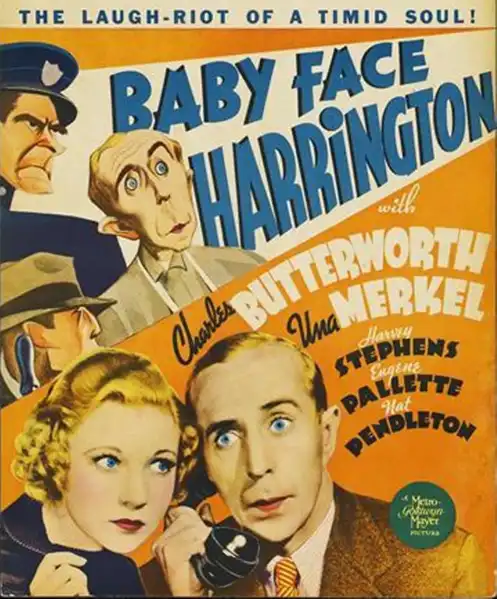
Willie Harrington is a wimpy small-town bookkeeper at a bank who unwittingly gets involved with the country's toughest gangster and his gang, and he gets suspected of being the leader of the gang. Hiis wife, Millie, files for divorce when she learns of his suspected-affiliation with the gangsters. The police have an all-out manhunt going for him, while he is being held by the gangsters in their hideout.
Decades after its release, Baby Face Harrington remains a vital piece of the cinematic puzzle. Its influence can be seen in countless modern works, solidifying Raoul Walsh's status as a master of the craft in United States and beyond.