
DbcultAccessing Vault...
Director's Spotlight
Senior Film Conservator
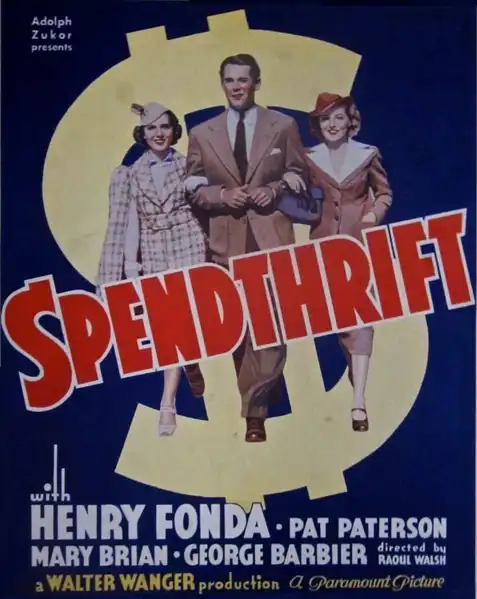
Director's Spotlight: United States
A Deep Dive into the 1936 Vision of Raoul Walsh
The artistic breakthrough represented by Spendthrift in 1936 highlights the philosophical inquiries that Raoul Walsh embeds within the narrative. Framed by the hauntingly beautiful landscapes of the production, it leaves an indelible mark on the soul of the viewer.
In Spendthrift, Raoul Walsh pushes the boundaries of conventional narrative. The film's unique approach to its subject matter has sparked endless debates and interpretations among cinephiles and critics alike.
To fully appreciate Spendthrift, one must consider the cinematic climate of 1936. During this period, United States was undergoing significant artistic shifts, and Raoul Walsh was at the forefront of this Sport movement, often challenging established norms.
| Cinematography | Handheld |
| Soundtrack | Minimalist |
| Editing | Disjunctive |
| Art Direction | Baroque |
Visualizing the convergence of Raoul Walsh's style and the core Sport narrative.
Profligate Townsend "Towny" Middleton, once the possessor of $20,000,000, becomes a "millionaire with everything but money." In order to enter his filly "Black Mamba" in the Kentucky Derby, Towny sells his polo horses. At Churchill Downs, Towny meets bankrupt Kentucky colonel Barnaby and his gold digging daughter Sally. During the Derby, Black Mamba's jockey falls off the horse and Towny loses. After the race, creditors try to repossess Black Mamba, but her devoted trainer, Valerie "Boots" O'Connell, steals her and places her on the private train car of Towny's dyspeptic, rich uncle Morton Middleton. On the train, Sally and Towny kiss. Back in Long Island, at Towny's Greenhill Manor, they marry, and Boots's heart is broken. On their honeymoon, Sally spends $12,000 on clothes, believing Towny is still a millionaire. When he scolds her for her extravagance, she throws a tantrum and forces him to concede. Boots's father, who managed the Middleton stables for years, then dies, and Towny shortens the honeymoon to return to Boots. Again Sally cries and Towny buys her a Rolls Royce to appease her. When Boots insists on leaving Greenhill Manor, Towny gives her Black Mamba to prevent creditors from using the filly as collateral against Towny. Towny's valet, Bill, finally tells Sally she's broke, but she is counting on Black Mamba and Uncle Morton's eighty million. Colonel Barnaby then arrives at Greenhill Manor for an indefinite stay. When Sally realizes Towny loves not her, but Boots, she dismisses Towny's staff, including Bill and Boots, and Towny again acquiesces. The sheriff then forecloses on Greenhill Manor, and Boots sells Black Mamba to Uncle Morton in order to help Towny, promising to train the horse for the next Kentucky Derby. Bill gets himself hired as Morton's health advisor and cures Morton's dispositional dyspepsia. When Barnaby and Sally go to Morton for money, Bill bugs their car and Morton overhears them saying they are waiting for him to die. After Morton buys Greenhill Manor and has Barnaby and Towny evicted, Towny becomes determined to get a job. He becomes a famous sports broadcaster and diligently saves his money. In lieu of Towny's success, the Barnabys resurface, but a wiser Towny tricks them into accepting $1,000 for a Reno divorce. Towny then broadcasts Mamba's winning race and proposes to Boots on the air.
Decades after its release, Spendthrift remains a vital piece of the cinematic puzzle. Its influence can be seen in countless modern works, solidifying Raoul Walsh's status as a master of the craft in United States and beyond.