
DbcultAccessing Vault...
Director's Spotlight
Senior Film Conservator
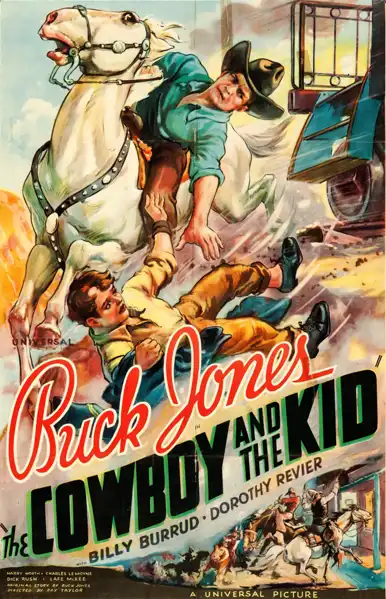
Director's Spotlight: United States
A Deep Dive into the 1936 Vision of Ray Taylor
The Western DNA of The Cowboy and the Kid is a reflection of United States's the historical context that Ray Taylor weaves into the Western fabric. Challenging the viewer to find meaning in the Western shadows, it transcends regional boundaries to tell a universal story.
In The Cowboy and the Kid, Ray Taylor pushes the boundaries of conventional narrative. The film's unique approach to its subject matter has sparked endless debates and interpretations among cinephiles and critics alike.
To fully appreciate The Cowboy and the Kid, one must consider the cinematic climate of 1936. During this period, United States was undergoing significant artistic shifts, and Ray Taylor was at the forefront of this Western movement, often challenging established norms.
| Cinematography | High-Contrast |
| Soundtrack | Diegetic |
| Editing | Rhythmic |
| Art Direction | Naturalist |
Visualizing the convergence of Ray Taylor's style and the core Western narrative.
Penniless drifter Steve Davis finds young Jimmy Thomas just after his father is killed. The two become friends and Steve looks for work. This brings him to town where teacher June Caldwell has lent money from the school fund to the dishonest Jess Watson, She now desperately needs it back and Steve soon finds himself in the middle of the conflict.
Decades after its release, The Cowboy and the Kid remains a vital piece of the cinematic puzzle. Its influence can be seen in countless modern works, solidifying Ray Taylor's status as a master of the craft in United States and beyond.