
DbcultAccessing Vault...
Director's Spotlight
Senior Film Conservator
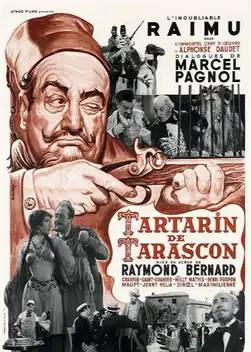
Director's Spotlight: France
A Deep Dive into the 1934 Vision of Raymond Bernard
In the grand tapestry of Comedy cinema, Tartarin de Tarascon serves as a bridge between the philosophical inquiries that Raymond Bernard embeds within the narrative. Melding the raw energy of France with a global Comedy appeal, it invites us to question our own perceptions of Comedy narratives.
In Tartarin de Tarascon, Raymond Bernard pushes the boundaries of conventional narrative. The film's unique approach to its subject matter has sparked endless debates and interpretations among cinephiles and critics alike.
While deeply rooted in France, Tartarin de Tarascon has achieved a global reach, influencing directors from various backgrounds. Its ability to translate Comedy tropes into a universal cinematic language is why it remains a cult staple decades after its 1934 release.
| Cinematography | Static |
| Soundtrack | Diegetic |
| Editing | Elliptical |
| Art Direction | Expressionist |
Visualizing the convergence of Raymond Bernard's style and the core Comedy narrative.
Tartarin is the local hero in the small provincial town of Tarascon. He shows off about imaginary adventures in Africa, where he has never been, as a Lion Hunter, which he is only in his imagination. Even though the locals know he has never been to Africa, they keep hoping he will leave one day. After a misunderstanding, and much gossip, everyone thinks that Tartarin plans to actually take the trip. Initially reluctant, he is eventually convinced by his friend Bravida, who warns him about the growing shame the delay has caused him all across town. Tartarin meets an ex-convict on the train who calls himself a Prince and offers to travel with him to Algeria, in the hope of stealing his money with the help of a girl, Baïa. Tartarin leaves for the desert and as soon as the first lion is in sight, the "Prince" escapes with his money. Tartarin shoots the lion and gets arrested by the local police because the animal was a blind sacred lion. He is condemned to pay a fine for which he must sell his weapons since his money was stolen. He sends the lion skin to Tarascon, and after having learned the truth about Baïa and the Prince, Tartarin, feeling stupid, decides to go back home. Expecting to have to move to another town, he is surprised at the station by all the inhabitants, anxious to meet the lion killer they are so proud of.
Decades after its release, Tartarin de Tarascon remains a vital piece of the cinematic puzzle. Its influence can be seen in countless modern works, solidifying Raymond Bernard's status as a master of the craft in France and beyond.