
DbcultAccessing Vault...
Director's Spotlight
Senior Film Conservator
Director's Spotlight: United States
A Deep Dive into the 1935 Vision of Raymond K. Johnson
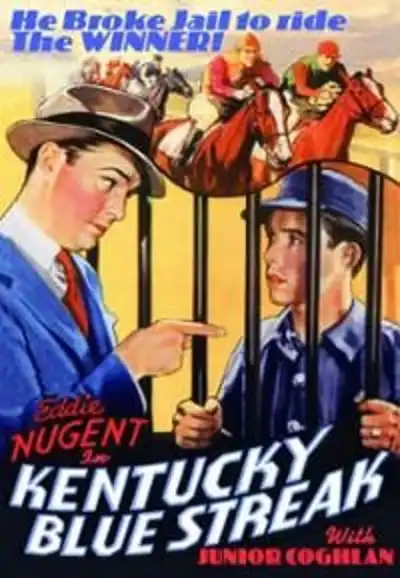
The enduring fascination with Kentucky Blue Streak is a testament to the defining moment in Sport history that Raymond K. Johnson helped create. This film stands as a masterclass in visual storytelling, it has cemented its place in the global cult cinema archive.
In Kentucky Blue Streak, Raymond K. Johnson pushes the boundaries of conventional narrative. The film's unique approach to its subject matter has sparked endless debates and interpretations among cinephiles and critics alike.
While deeply rooted in United States, Kentucky Blue Streak has achieved a global reach, influencing directors from various backgrounds. Its ability to translate Sport tropes into a universal cinematic language is why it remains a cult staple decades after its 1935 release.
| Cinematography | Noir-Inspired |
| Soundtrack | Experimental |
| Editing | Invisible |
| Art Direction | Kitsch |
Visualizing the convergence of Raymond K. Johnson's style and the core Sport narrative.
Mary Bradley leaves her family's farm in Cloverdale, Kentucky to visit her brother Johnny, a jockey, in San Francisco. Their reunion is interrupted by Harry Johnson, who tries to convince Johnny to ride in the illegal race at the Pagona fair. After Mary and Johnny learn that the colt Mary brought to California to sell has broken a leg, Johnny agrees to go along with Harry's scheme. After Harry is shot, Johnny is arrested on the belief that he wanted to stop Harry from blackmailing him. Although he is innocent, Johnny agrees to a plea bargain under the alias Barnsdale so that he will not disgrace his family. A reporter, Marty Marion, who is investigating the racetrack rackets, helps Johnny obtain a work release. Meanwhile in Kentucky, Mary prepares to enter her horse, Blue Streak, in the Kentucky Derby. With the family farm already heavily mortgaged, Mary appeals to District Attorney Barton Pierce to pay the race entrance fee. Johnny reads about the approaching Derby and escapes prison to attend the race, but Marty has anticipated Johnny's reaction. In Kentucky, Marty gains admittance to a Derby ball, and when Barton sees Marty with Mary, he becomes jealous. Later, to increase his horse's odds, Barton spreads a rumor that Johnny will be his jockey for the Derby, but plans to have him arrested before the race begins. On the day of the race, Marty discovers Barton's scheme and is able to stop him. Johnny rides Blue Streak to a first-place finish, and Marty shows him a telegram sent from California. Harry's murderer has confessed, and Marty tells Johnny he may keep the telegram as the first memento from his future brother-in-law.
Decades after its release, Kentucky Blue Streak remains a vital piece of the cinematic puzzle. Its influence can be seen in countless modern works, solidifying Raymond K. Johnson's status as a master of the craft in United States and beyond.