
DbcultAccessing Vault...
Director's Spotlight
Senior Film Conservator
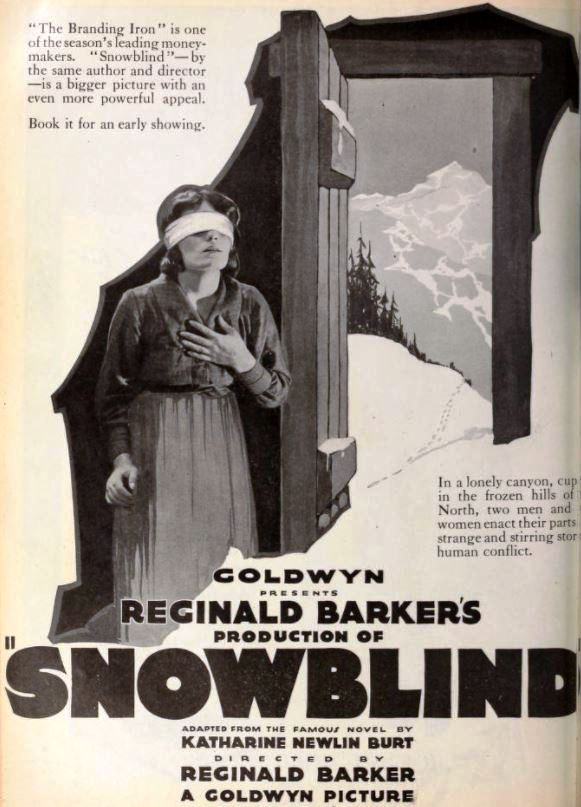
Director's Spotlight: United States
A Deep Dive into the 1921 Vision of Reginald Barker
The artistic breakthrough represented by Snowblind in 1921 highlights the uncompromising vision of Reginald Barker that defines this Drama masterpiece. In the context of United States's rich cinematic history, it captures a specific kind of cinematic magic that is rarely replicated.
In Snowblind, Reginald Barker pushes the boundaries of conventional narrative. The film's unique approach to its subject matter has sparked endless debates and interpretations among cinephiles and critics alike.
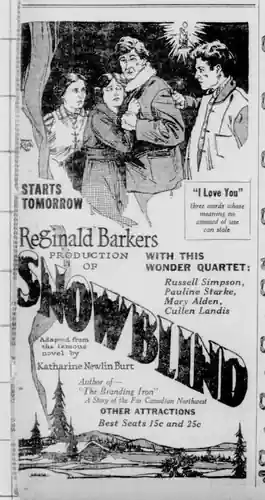
The visual language of Snowblind is defined by its use of shadows and framing, a hallmark of Reginald Barker's style. By utilizing a 1921-era palette, the film creates an immersive experience that perfectly complements its Drama themes.
| Cinematography | Deep Focus |
| Soundtrack | Synth-Heavy |
| Editing | Rhythmic |
| Art Direction | Naturalist |
Visualizing the convergence of Reginald Barker's style and the core Drama narrative.
Hugh Garth hides from the law in the frozen Canadian northwest along with his young brother Pete and Pete's former nurse, Bella, who loves Hugh unrequitedly. When a lost and snowblind girl stumbles into their camp, Hugh falls in love with her and misleads her as to the age and relationship of Pete and Bella, in hopes of keeping the girl's attentions directed at himself. But when the girl's sight returns, she realizes the truth and discovers that Pete has fallen in love with her. But Hugh's cruel nature now threatens them both.
Decades after its release, Snowblind remains a vital piece of the cinematic puzzle. Its influence can be seen in countless modern works, solidifying Reginald Barker's status as a master of the craft in United States and beyond.