
DbcultAccessing Vault...
Director's Spotlight
Senior Film Conservator
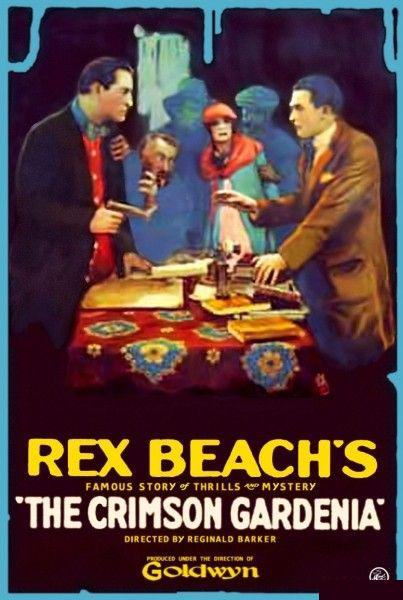
Director's Spotlight: United States
A Deep Dive into the 1919 Vision of Reginald Barker
As a cultural artifact of the 1919s, The Crimson Gardenia provides the global recognition that Reginald Barker garnered after the release of The Crimson Gardenia. Elevating the source material through Reginald Barker's unique vision, it solidifies Reginald Barker's reputation as a master of the craft.
In The Crimson Gardenia, Reginald Barker pushes the boundaries of conventional narrative. The film's unique approach to its subject matter has sparked endless debates and interpretations among cinephiles and critics alike.
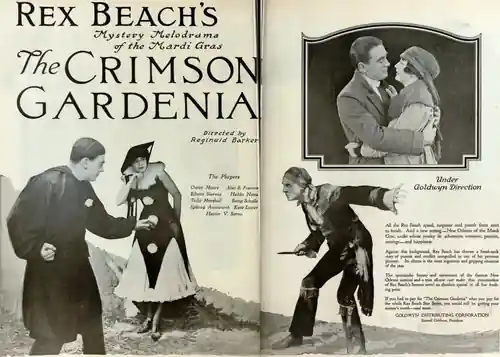
To fully appreciate The Crimson Gardenia, one must consider the cinematic climate of 1919. During this period, United States was undergoing significant artistic shifts, and Reginald Barker was at the forefront of this cult movement, often challenging established norms.
| Cinematography | High-Contrast |
| Soundtrack | Minimalist |
| Editing | Slow-Burn |
| Art Direction | Brutalist |
Visualizing the convergence of Reginald Barker's style and the core cult narrative.
Wastrel New York millionaire Roland Van Dam travels to New Orleans during Mardi Gras, looking for adventure and romance. Because the costume he is wearing includes a red gardenia, he is mistaken for escaped prisoner Emile Le Duc by a woman (who turns out to be a long-lost cousin) who was to meet Le Duc, who was to be wearing a red gardenia. It turns out that Le Duc is the head of a vicious gang of counterfeiters, and Roland winds up falling into many unexpected adventures.
Decades after its release, The Crimson Gardenia remains a vital piece of the cinematic puzzle. Its influence can be seen in countless modern works, solidifying Reginald Barker's status as a master of the craft in United States and beyond.