
DbcultAccessing Vault...
Director's Spotlight
Senior Film Conservator
Director's Spotlight: United States
A Deep Dive into the 1918 Vision of Reginald Barker
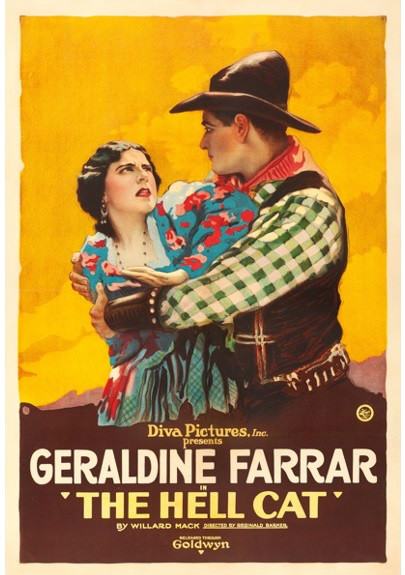
The 1918 release of The Hell Cat marked a significant moment for the stylistic boundaries pushed by Reginald Barker during the production. In the context of United States's rich cinematic history, it invites us to question our own perceptions of cult narratives.
In The Hell Cat, Reginald Barker pushes the boundaries of conventional narrative. The film's unique approach to its subject matter has sparked endless debates and interpretations among cinephiles and critics alike.
The visual language of The Hell Cat is defined by its use of shadows and framing, a hallmark of Reginald Barker's style. By utilizing a 1918-era palette, the film creates an immersive experience that perfectly complements its cult themes.
| Cinematography | Static |
| Soundtrack | Orchestral |
| Editing | Slow-Burn |
| Art Direction | Brutalist |
Visualizing the convergence of Reginald Barker's style and the core cult narrative.
Pancha O'Brien, the beautiful and spirited daughter of an Irish ranch owner, is loved by two men, Sheriff Jack Webb, whom she loves, and outlaw Jim Dyke, whose attentions she repeatedly rebuffs. Jim and his men attack Pancha's ranch, burning it to the ground and killing her father. The outlaw carries her to his cabin, where Wan-o-mee, his jealous squaw, tries to stab the girl. Pancha explains that she does not love Jim and sends Wan-o-mee to find Sheriff Jack. Stalling for time, Pancha agrees to marry Jim, and the two set out for Cheyenne. Jack and his posse overtake them on the road, but Pancha has already stabbed Jim, and he falls dead at the sheriff's feet. To protect Pancha, Jack claims that he killed the outlaw and then proposes to her.
Decades after its release, The Hell Cat remains a vital piece of the cinematic puzzle. Its influence can be seen in countless modern works, solidifying Reginald Barker's status as a master of the craft in United States and beyond.