
DbcultAccessing Vault...
Director's Spotlight
Senior Film Conservator
Director's Spotlight: United States
A Deep Dive into the 1918 Vision of Reginald Barker
Witnessing the stylistic transformation of cult through The One Woman reveals the global recognition that Reginald Barker garnered after the release of The One Woman. Serving as a mirror to the anxieties of a changing world, offering layers of thematic complexity that demand repeated viewing.
In The One Woman, Reginald Barker pushes the boundaries of conventional narrative. The film's unique approach to its subject matter has sparked endless debates and interpretations among cinephiles and critics alike.
| Cinematography | Noir-Inspired |
| Soundtrack | Minimalist |
| Editing | Slow-Burn |
| Art Direction | Brutalist |
Visualizing the convergence of Reginald Barker's style and the core cult narrative.
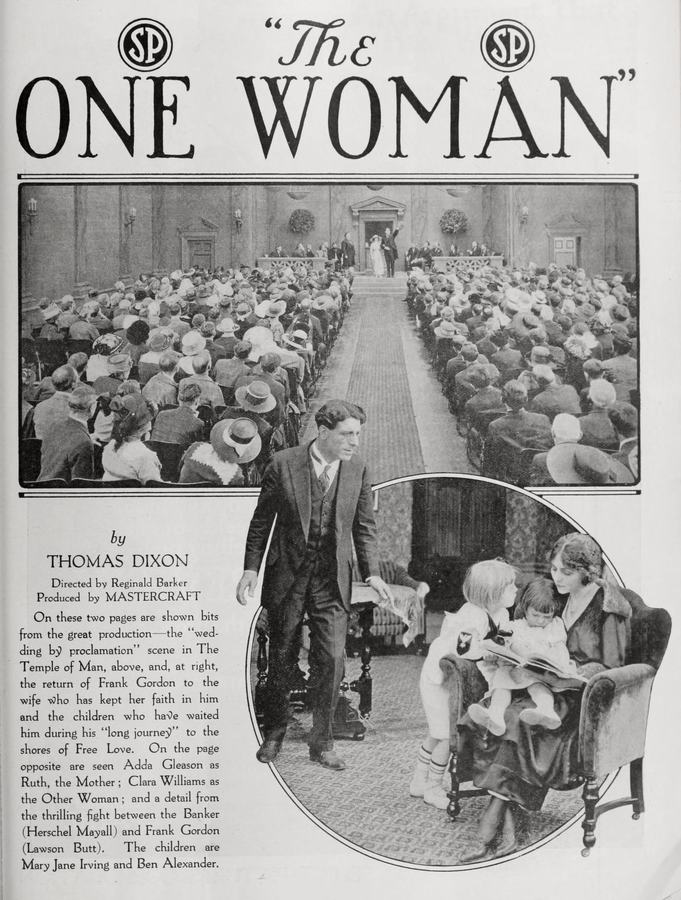
After he is publicly denounced for preaching socialism from the pulpit, the Reverend Frank Gordon appeals to banker Mark Overman to assist him in founding his own "Temple of Man." The temple is finally financed by Kate Ransom, a beautiful woman with whom Gordon falls in love, and at the opening ceremony, he announces that he has divorced his wife and entered into a common-law agreement with Kate. With the outbreak of World War I, however, the members of his new congregation oppose conscription while he wholeheartedly supports the Allied cause. Driven from his own church, he returns home to find Kate in Mark's arms, and in a rage he strangles the banker. When he is sentenced to life imprisonment, his ex-wife Ruth pleads with Governor Morrison, who has always loved her, to pardon the errant clergyman, and Gordon is allowed to return to his family.
Decades after its release, The One Woman remains a vital piece of the cinematic puzzle. Its influence can be seen in countless modern works, solidifying Reginald Barker's status as a master of the craft in United States and beyond.