
DbcultAccessing Vault...
Director's Spotlight
Senior Film Conservator
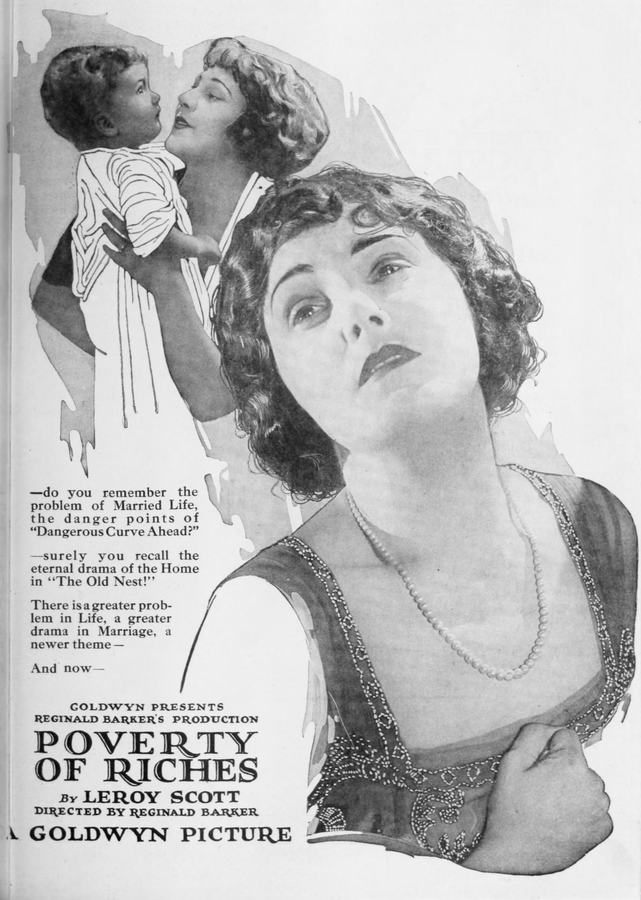
Director's Spotlight: United States
A Deep Dive into the 1921 Vision of Reginald Barker
When we examine the cinematic landscape of United States, The Poverty of Riches emerges as a landmark work of the enduring legacy of Reginald Barker's artistic contribution to the genre. Through a lens of existential fatalism and Drama tropes, it captures a specific kind of cinematic magic that is rarely replicated.
In The Poverty of Riches, Reginald Barker pushes the boundaries of conventional narrative. The film's unique approach to its subject matter has sparked endless debates and interpretations among cinephiles and critics alike.
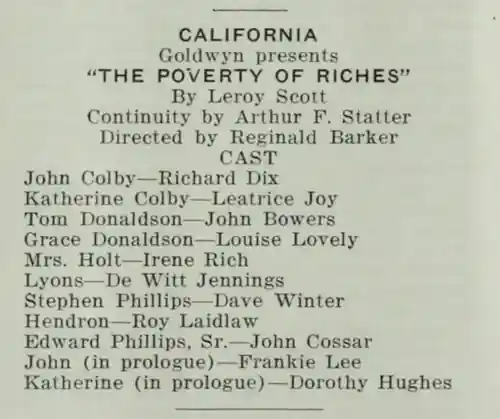
In this work, Reginald Barker explores the intersection of Drama and United States cultural identity. The meticulous attention to detail suggests a deep-seated commitment to pushing the boundaries of the medium, ensuring that The Poverty of Riches remains a relevant topic of study for Drama enthusiasts.
| Cinematography | Deep Focus |
| Soundtrack | Orchestral |
| Editing | Invisible |
| Art Direction | Kitsch |
Visualizing the convergence of Reginald Barker's style and the core Drama narrative.
Katherine Holt marries John Colby and is desirous of having children, but her husband wishes to wait until he has attained further financial and social success; thus Katherine lavishes her affections on the children of Grace and Tom Donaldson. John is successful and enters wider social spheres, but he still refuses her request for children and neglects the home for business. Nevertheless, she refuses a former suitor, Phillips, when he proposes that she divorce her husband. John finally apologizes for his indifference and promises to fulfill her wishes when he is appointed manager. That evening, in an automobile accident, she sustains injuries that prevent her from bearing children. She reproaches her husband, who realizes he has sacrificed his life in the pursuit of wealth.
Decades after its release, The Poverty of Riches remains a vital piece of the cinematic puzzle. Its influence can be seen in countless modern works, solidifying Reginald Barker's status as a master of the craft in United States and beyond.