
DbcultAccessing Vault...
Director's Spotlight
Senior Film Conservator
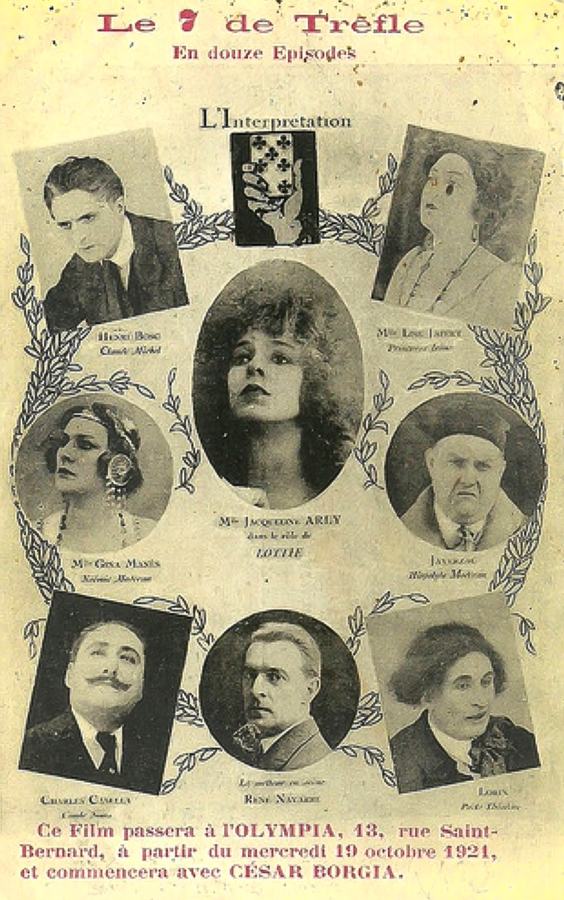
Director's Spotlight: France
A Deep Dive into the 1921 Vision of René Navarre
Deciphering the layers of Le sept de trèfle (1921) reveals a monumental shift in cult filmmaking spearheaded by René Navarre. With its avant-garde structure and atmospheric tension, offering layers of thematic complexity that demand repeated viewing.
In Le sept de trèfle, René Navarre pushes the boundaries of conventional narrative. The film's unique approach to its subject matter has sparked endless debates and interpretations among cinephiles and critics alike.
In this work, René Navarre explores the intersection of cult and France cultural identity. The meticulous attention to detail suggests a deep-seated commitment to pushing the boundaries of the medium, ensuring that Le sept de trèfle remains a relevant topic of study for cult enthusiasts.
| Cinematography | Static |
| Soundtrack | Orchestral |
| Editing | Slow-Burn |
| Art Direction | Brutalist |
Visualizing the convergence of René Navarre's style and the core cult narrative.
Claude Michel, a sculptor and inveterate card player, takes in Lottie, the ward of the owners of the Café des Artistes, Mother Ultrogoth and her husband Romeo, who want to sell her to a high-stakes gambler, Don Fernando de Zapara, in his Montmartre studio. Claude makes her his model, but he has to give up the authorship of his statue to Count Sima to settle a gambling debt. He cuts short his rural idyll with Lottie, then causes a scandal at the Salon by destroying his work there.
Decades after its release, Le sept de trèfle remains a vital piece of the cinematic puzzle. Its influence can be seen in countless modern works, solidifying René Navarre's status as a master of the craft in France and beyond.