
DbcultAccessing Vault...
Director's Spotlight
Senior Film Conservator
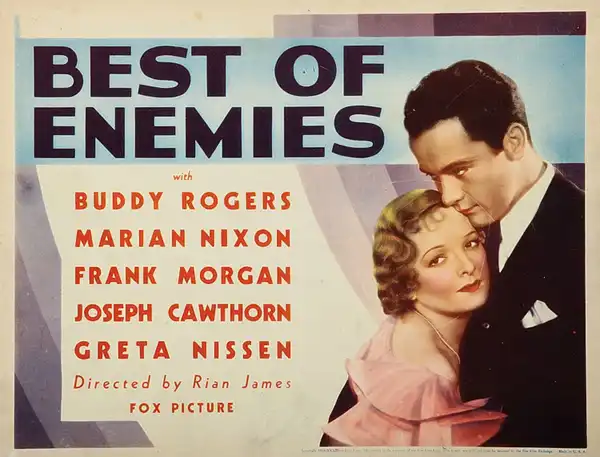
Director's Spotlight: United States
A Deep Dive into the 1933 Vision of Rian James
The evocative power of Best of Enemies stems from the unique collaboration between the subversive storytelling techniques employed by Rian James in 1933. Synthesizing the best elements of United States and international cinema, it reminds us of the fragility and beauty of the 1933s.
In Best of Enemies, Rian James pushes the boundaries of conventional narrative. The film's unique approach to its subject matter has sparked endless debates and interpretations among cinephiles and critics alike.
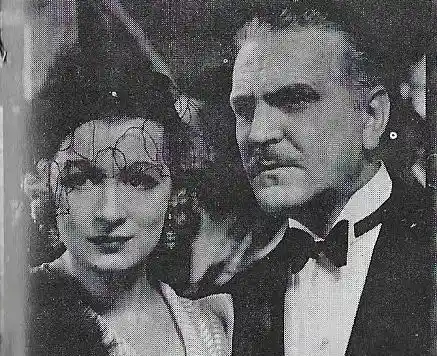
While deeply rooted in United States, Best of Enemies has achieved a global reach, influencing directors from various backgrounds. Its ability to translate Romance tropes into a universal cinematic language is why it remains a cult staple decades after its 1933 release.
| Cinematography | High-Contrast |
| Soundtrack | Orchestral |
| Editing | Slow-Burn |
| Art Direction | Brutalist |
Visualizing the convergence of Rian James's style and the core Romance narrative.
William H. Hartman, an American businessman who has contributed a lot of money to help bring about prohibition, visits the beer garden of his German-American neighbor, Gus Schneider, hoping to buy Schneider's lease. Schneider, who hates Hartman, refuses. Hartman, whose young son Jimmie is a playmate of Schneider's daughter Lena, orders Jimmie not to play with Lena, after which he imbibes from a hidden bottle of whiskey. After prohibition takes effect, Schneider's converted restaurant draws few customers. Hartman now refuses Schneider's offer to sell the lease, and soon Schneider is dispossessed. He moves back to Germany, although he keeps his American citizenship. Meanwhile, Hartman builds a forty-story office building on the spot of Schneider's former beer garden. Twelve years later, Jimmie is devoting more time to music than to his studies. Although Hartman would like his son to become a financier, he agrees to send him to a conservatory in Germany. There he meets Lena, who is also studying music. Their initial attraction is furthered when they have dinner together and realize their identities. Because Schneider hates the name of Hartman, Jimmie suggests that Lena introduce him as "Jim Harty." Hartman, after perusing a girly magazine from Europe, decides to take a trip to visit his son. When Jimmie sees that his roommate August, a cellist, cannot afford to eat lunch everyday, he visits Schneider in his hofbrau and convinces Schneider to hire him and his fellow students to play jazz for food and beer. On the night of Lena's music competition, after which Jimmie plans to sail home, Lena tells him in German, which he does not understand, that she would like more than anything for him to stay. When Lena does not win, because a professor whose name is Hartman breaks a tie vote and chooses her competitor, Schneider vows to choke the next Hartman who comes into his life. Jimmie, who has now learned what Lena told him in German, comforts her and, after telling her that he loves her, gets a job in a brewery and moves in with a friend. He writes a tune based on the rhythm he hears at the brewery and on Lena's music, and soon after he performs the song with his band, he has a hit which makes the hofbrau one of the busiest places in town. Hartman, with a blonde date, drinks beer there, not knowing that Schneider is the owner, but when he sees Jimmie, he goes backstage and orders him to give up the band. When Schneider interrupts and learns Jimmie's identity, he fires the band and objects to Jimmie marrying his daughter because, he says, he does not want to be the grandfather of little Hartmans. Jimmie and Lena elope on an ocean liner bound for America, and the two fathers follow. When Jimmie learns that they are on the boat, he delivers messages to both, supposedly from the other, urging a reconciliatory meeting. Hartman and Schneider drink beer together and sing, and decide to open a brewery together, when Jimmie and Lena interrupt them and reveal that they have married. A final argument about which father gave in and wrote the first note is never settled because in the midst of their bickering, the notes are blown overboard.
Decades after its release, Best of Enemies remains a vital piece of the cinematic puzzle. Its influence can be seen in countless modern works, solidifying Rian James's status as a master of the craft in United States and beyond.