
DbcultAccessing Vault...
Director's Spotlight
Senior Film Conservator
Director's Spotlight: United States
A Deep Dive into the 1915 Vision of Richard Ridgely
Witnessing the stylistic transformation of cult through Ranson's Folly reveals the global recognition that Richard Ridgely garnered after the release of Ranson's Folly. Serving as a mirror to the anxieties of a changing world, offering layers of thematic complexity that demand repeated viewing.
In Ranson's Folly, Richard Ridgely pushes the boundaries of conventional narrative. The film's unique approach to its subject matter has sparked endless debates and interpretations among cinephiles and critics alike.
In this work, Richard Ridgely explores the intersection of cult and United States cultural identity. The meticulous attention to detail suggests a deep-seated commitment to pushing the boundaries of the medium, ensuring that Ranson's Folly remains a relevant topic of study for cult enthusiasts.
| Cinematography | Deep Focus |
| Soundtrack | Experimental |
| Editing | Elliptical |
| Art Direction | Expressionist |
Visualizing the convergence of Richard Ridgely's style and the core cult narrative.
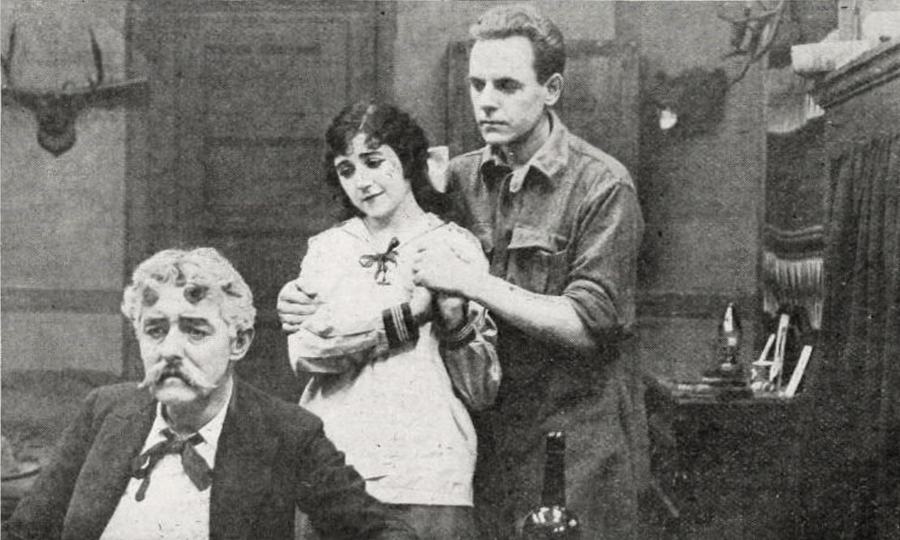
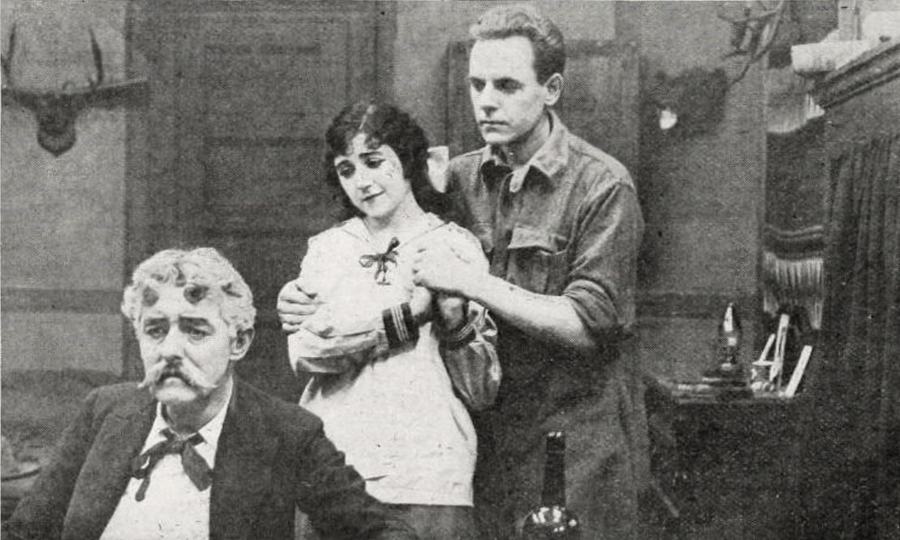
Filled with memories of the Philippine campaign, Lieutenant Ranson returns to the United States. After a month or two in Washington, he tells his father that he must have a change, and a chance to see some excitement. General Ranson writes and arranges to have him go to Fort Stanton, Texas, an Army post commanded by an old friend. Arrived at the railroad town nearest to the post, Ranson is conveyed to the post by stagecoach. A prairie fire is in progress a few miles away from Fort Stanton, and Ranson joins the soldiers and others in fighting it. Incidentally, he is successful in rescuing Mary Cahill, the daughter of the post-trader, Patrick Cahill. Ranson is received into the life of the fort and becomes a leader among the younger men. Ranson talks of the "big doings" out in the Philippines, and is "bored to death" with the dull routine of the fort. When one of the men calls his attention to a placard announcing a large reward for the capture of "The Red Rider," Ranson declares that it is nothing at all to hold up a stage; that anyone can do it and get away with it; that on a $50 bet, he himself, will hold up the stagecoach that night with a pair of shears. His brother officers ridicule the idea. Ranson insists that he can, and will, do it. Meantime, at the railway town, the coach has already started when Lieutenant Patten, the paymaster, arrives, carrying a bag containing $10.000 with which to pay off the soldiers. Finding the coach gone, he engages a man with a buckboard to drive him to the fort. Ranson successfully holds up the stagecoach. He is polite to the two lady passengers and takes nothing from anybody except a souvenir from one of the ladies, in the form of her photograph, this being sufficient proof to show his brother officers. He then rides back to the post. Meantime, Lieutenant Patten, hurrying along in the buckboard, is held up by a masked man dressed almost exactly as was Ranson. In a fight that ensues, the highwayman shoots and kills the driver of the buckboard, and wounds the lieutenant in the shoulder. The robber then gets possession of the bag of money and makes good his escape, but not before he has been himself shot in the hand by the paymaster. At the post, the news of the robbery arrives with the return of the detachment of men who have been sent out to escort the paymaster. They bring Lieutenant Patten with them, and he tells of the robbery and of having wounded the robber in the hand. As an outcome of the whole affair, Ranson is arrested, charged with having held up both stage and the pay-train. He is confined to his quarters, awaiting court martial, and there he sends for Mr. Cahill, with whom he wishes to speak in regard to Mary. He notices that Cabin's hand is bandaged, but Cahill tells him that his pony bit him while he was bridling her. Mary enters, and in the course of the conversation tells Ranson that her father has told her that he shot himself in the hand while fooling with his revolver. Ranson is at once suspicious, and when Mary goes out he accuses Cahill of being the real "Red Rider." Finally Cahill confesses that it is true. Ranson tells him that no matter what happened, he will stick by his daughter. He urges Cahill to hurry away to Fort Worth on the pretext of buying an engagement ring. Cahill says he will do so and that he will write a letter of confession exonerating Ranson, after he is safely in Canada. But hardly has he entered the other room when Ranson hears a shot. Rushing in, he finds Cahill lying across the table, a bullet through his brain. By his hand is a brief note of confession, which he has hastily scribbled. As Mary rushes in, Ranson draws her back but she has guessed the truth. Her father has paid for his long-concealed life of crime, and now she gives herself wholly into Ranson's keeping, knowing that her father's wish was to have them marry and be happy.
Decades after its release, Ranson's Folly remains a vital piece of the cinematic puzzle. Its influence can be seen in countless modern works, solidifying Richard Ridgely's status as a master of the craft in United States and beyond.