
DbcultAccessing Vault...
Director's Spotlight
Senior Film Conservator
Director's Spotlight: United States
A Deep Dive into the 1924 Vision of Richard Smith
The 1924 release of Green Tees marked a significant moment for the enduring legacy of Richard Smith's artistic contribution to the genre. By challenging the status quo of 1924 cinema, it has cemented its place in the global cult cinema archive.
In Green Tees, Richard Smith pushes the boundaries of conventional narrative. The film's unique approach to its subject matter has sparked endless debates and interpretations among cinephiles and critics alike.
| Cinematography | Static |
| Soundtrack | Experimental |
| Editing | Invisible |
| Art Direction | Kitsch |
Visualizing the convergence of Richard Smith's style and the core Short narrative.
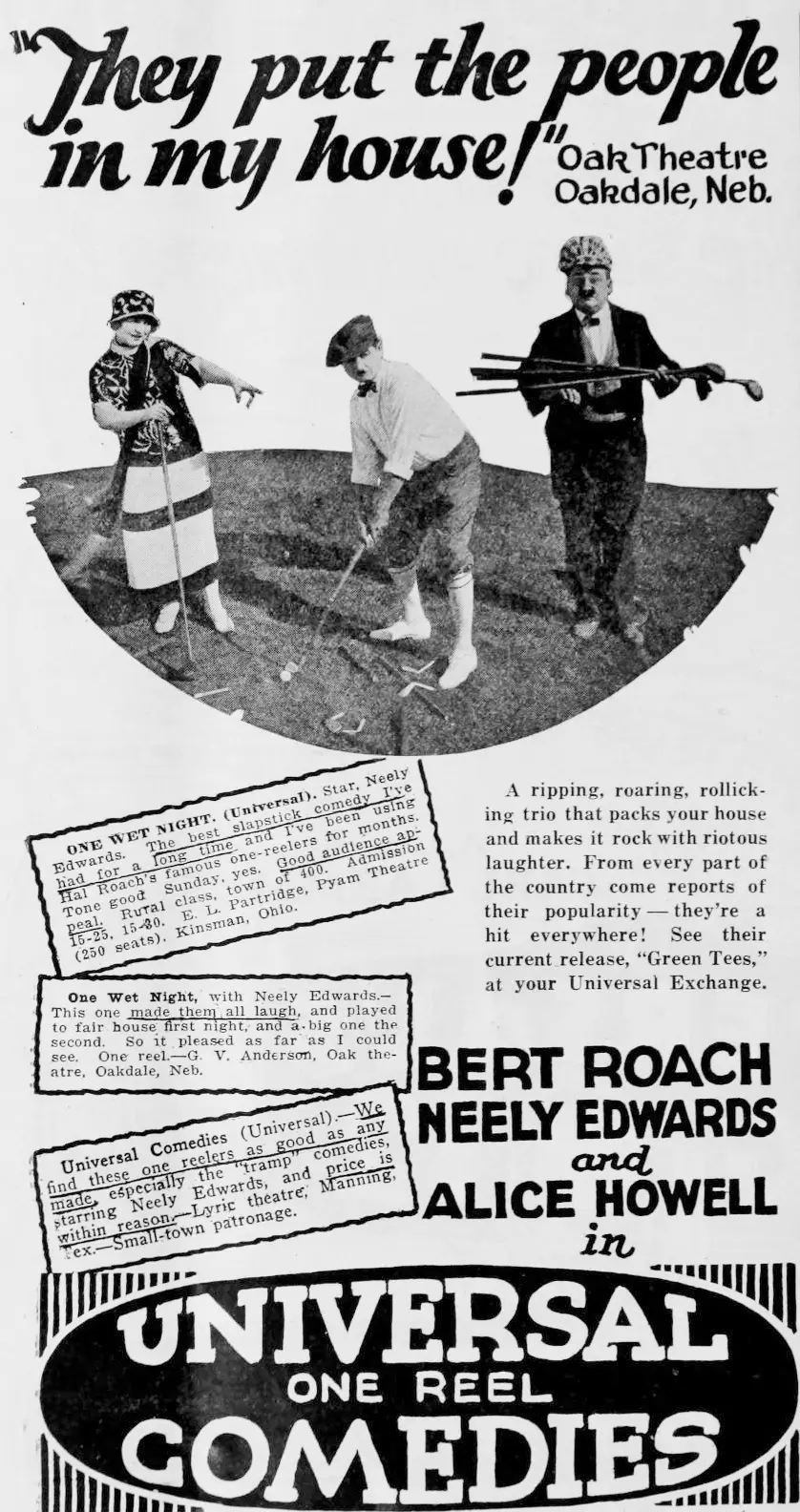
Hubby promises to go to work if wifie beats him at golf. They go out to the golf course and wifie frames him up with the butler so as to prevent him from hitting the ball. Hubby breaks a number of golf sticks while hitting a dummy ball until the butler puts down a real one and he hits it into the lake. A fish grabs the ball and they go diving for the fish; they find the fish, take the ball from his stomach and go back to their game. In the meanwhile a holdup man runs off with a bag of money from a wealthy man and sits down in the park where hubby is playing. Hubby lays the ball down, drives off, hitting the holdup man in the head and knocking him cold. The wealthy man follows and gives hubby a big reward for saving the money. Wifie tells hubby that he won't have to work any more.
Decades after its release, Green Tees remains a vital piece of the cinematic puzzle. Its influence can be seen in countless modern works, solidifying Richard Smith's status as a master of the craft in United States and beyond.