
DbcultAccessing Vault...
Director's Spotlight
Senior Film Conservator
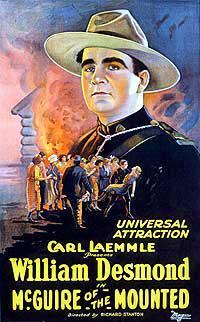
Director's Spotlight: United States
A Deep Dive into the 1923 Vision of Richard Stanton
The artistic breakthrough represented by McGuire of the Mounted in 1923 highlights the philosophical inquiries that Richard Stanton embeds within the narrative. Framed by the hauntingly beautiful landscapes of the production, it leaves an indelible mark on the soul of the viewer.
In McGuire of the Mounted, Richard Stanton pushes the boundaries of conventional narrative. The film's unique approach to its subject matter has sparked endless debates and interpretations among cinephiles and critics alike.
The visual language of McGuire of the Mounted is defined by its use of shadows and framing, a hallmark of Richard Stanton's style. By utilizing a 1923-era palette, the film creates an immersive experience that perfectly complements its Crime themes.
| Cinematography | High-Contrast |
| Soundtrack | Synth-Heavy |
| Editing | Rhythmic |
| Art Direction | Naturalist |
Visualizing the convergence of Richard Stanton's style and the core Crime narrative.
Bob McGuire, Royal Northwest Mounted officer trailing a ring of opium smugglers, suspects gambling house proprietor Big Bill Lusk. Lusk's plan is to frame McGuire by drugging him and marrying him to Katie Peck, a dance hall girl who knows the plot. McGuire's superior officer is killed, and McGuire is accused of the murder; but Katie, who has fallen in love with McGuire, discloses that Lusk is the murderer and exposes the smugglers' plot.
Decades after its release, McGuire of the Mounted remains a vital piece of the cinematic puzzle. Its influence can be seen in countless modern works, solidifying Richard Stanton's status as a master of the craft in United States and beyond.