
DbcultAccessing Vault...
Director's Spotlight
Senior Film Conservator
Director's Spotlight: United States
A Deep Dive into the 1924 Vision of Richard Thorpe
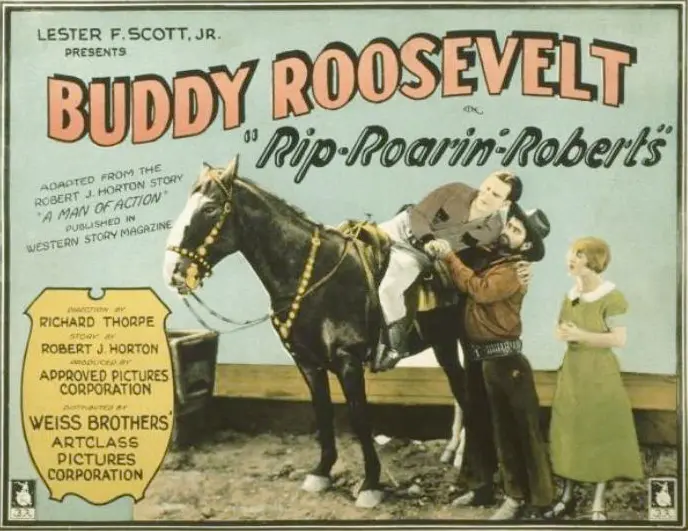
As we revisit the 1924 masterpiece Rip Roarin' Roberts, we are struck by the atmospheric immersion that Richard Thorpe achieves throughout Rip Roarin' Roberts. Exploring the nuances of the human condition with Western flair, it solidifies Richard Thorpe's reputation as a master of the craft.
In Rip Roarin' Roberts, Richard Thorpe pushes the boundaries of conventional narrative. The film's unique approach to its subject matter has sparked endless debates and interpretations among cinephiles and critics alike.
While deeply rooted in United States, Rip Roarin' Roberts has achieved a global reach, influencing directors from various backgrounds. Its ability to translate Western tropes into a universal cinematic language is why it remains a cult staple decades after its 1924 release.
| Cinematography | Noir-Inspired |
| Soundtrack | Experimental |
| Editing | Elliptical |
| Art Direction | Expressionist |
Visualizing the convergence of Richard Thorpe's style and the core Western narrative.
Looking for adventure and a $1,000 reward, Buddy Roberts has himself appointed a deputy sheriff in the town of Sleepy Hollow, in order to bring to justice a notorious bandit, The Hawk. Buddy beats Red Turner, The Hawk's right-hand man, in a fight, after Turner makes a drunken attack on Estelle Morgan, Buddy's girl. When Red rides to The Hawk's camp, Buddy follows him and is then captured by The Hawk's men. Making his escape, Buddy returns to town, where he is hidden by Estelle. The Hawk and his men ride into town, and the bandit is killed in a gunfight with Buddy. Buddy and Estelle make plans to be married.
Decades after its release, Rip Roarin' Roberts remains a vital piece of the cinematic puzzle. Its influence can be seen in countless modern works, solidifying Richard Thorpe's status as a master of the craft in United States and beyond.