
DbcultAccessing Vault...
Director's Spotlight
Senior Film Conservator
Director's Spotlight: Denmark
A Deep Dive into the 1915 Vision of Robert Dinesen
When we examine the cinematic landscape of Denmark, The Folly of Sin emerges as a landmark work of the enduring legacy of Robert Dinesen's artistic contribution to the genre. Through a lens of existential fatalism and cult tropes, it captures a specific kind of cinematic magic that is rarely replicated.
In The Folly of Sin, Robert Dinesen pushes the boundaries of conventional narrative. The film's unique approach to its subject matter has sparked endless debates and interpretations among cinephiles and critics alike.
| Cinematography | High-Contrast |
| Soundtrack | Synth-Heavy |
| Editing | Disjunctive |
| Art Direction | Baroque |
Visualizing the convergence of Robert Dinesen's style and the core cult narrative.
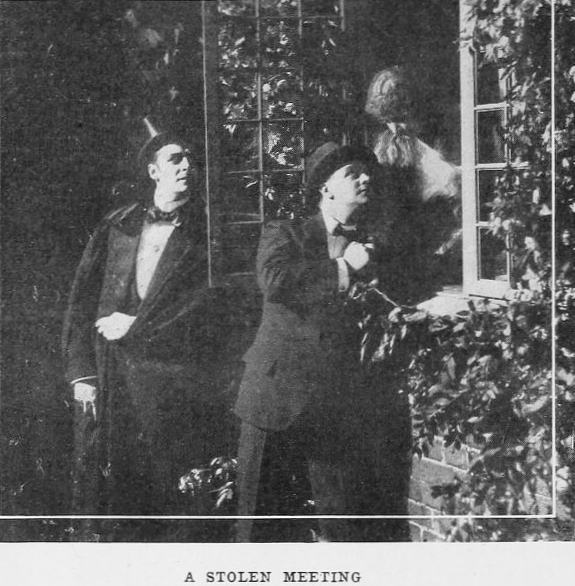
Dr. Hatton and Dr. Felix, two young physicians, are working to produce a serum for the cure of cancer. Dr. Felix secretly envies Dr. Hatton's personality and social conquests, while the latter is jealous of the other's more advanced work. Hatton conceives a plan to divert his colleague's mind from his work by getting him interested in society and a charming orphan, Margaret. Lieutenant Vincent, Margaret's brother and guardian, is soon transferred to another city and Margaret is left alone with an old aunt. Dr. Hatton maneuvers so that Felix spends most of his time with Margaret, while he diligently applies himself to his work. Marguerite's infatuation for Felix results disastrously, and Dudley, Lieutenant's friend, goes to inform him of the improper relations between his sister and the physician. Vincent obtains leave of absence and sets out to defend his sister's honor. Meanwhile Margaret has written Felix about her condition, to which he replies with a check. This she indignantly returns to him. Upon his return Lieutenant Vincent challenges Dr. Felix to a duel, in which the former is fatally wounded. Felix is sent to prison for six months, and the night of his release Dr. Hatton, as Mephistopheles, takes him to a mask ball. In the midst of revelry Dr. Felix thinks how cruelly he has treated Margaret, and he goes to the hospital in search of her, where he learns that she and her child both have died. Overwhelmed by sorrow he returns to his rooms, where he reads of Dr. Hatton's discovery of the cancer cure. Too late he realizes that Dr. Hatton's duplicity has ruined his career. As life no longer appeals to him he takes poison and his dying eyes behold a vision of Mephistopheles with the face of Dr. Hatton, and seems to hear his mocking words: "I have superseded you. Your folly achieved my triumph."
Decades after its release, The Folly of Sin remains a vital piece of the cinematic puzzle. Its influence can be seen in countless modern works, solidifying Robert Dinesen's status as a master of the craft in Denmark and beyond.