
DbcultAccessing Vault...
Director's Spotlight
Senior Film Conservator
Director's Spotlight: United States
A Deep Dive into the 1915 Vision of Robert Ellis
Deciphering the layers of The Apaches of Paris (1915) reveals a monumental shift in cult filmmaking spearheaded by Robert Ellis. With its avant-garde structure and atmospheric tension, offering layers of thematic complexity that demand repeated viewing.
In The Apaches of Paris, Robert Ellis pushes the boundaries of conventional narrative. The film's unique approach to its subject matter has sparked endless debates and interpretations among cinephiles and critics alike.
To fully appreciate The Apaches of Paris, one must consider the cinematic climate of 1915. During this period, United States was undergoing significant artistic shifts, and Robert Ellis was at the forefront of this cult movement, often challenging established norms.
| Cinematography | Static |
| Soundtrack | Diegetic |
| Editing | Elliptical |
| Art Direction | Expressionist |
Visualizing the convergence of Robert Ellis's style and the core cult narrative.
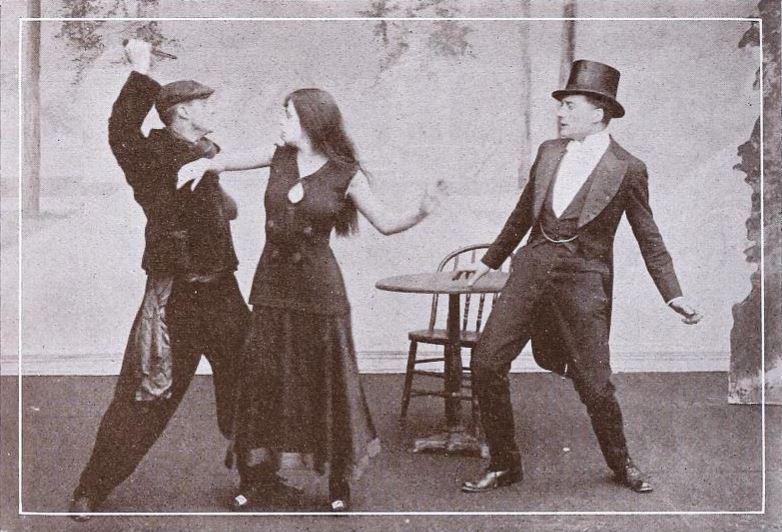
In his effort to ensnare Paula, an American girl studying music in Paris, Darcelle intercepts her mail and steals the money sent her from America. When financial reverses beggar the Farrells, they send Paula her passage money and urge her to return home. This money is stolen by Darcelle. Desperate, and anxious to aid her mother and sister, the girl falls a victim to the scoundrel's wiles. Mrs. Farrell dies, believing that her daughter has achieved success abroad. Marjorie, Paula's sister, unexpectedly comes to Paris to live with her. Paula endeavors to hide her secret, but it is revealed when Austin, a young American who loves her, learns of the girl's affair with Darcelle. Late that night, half-crazed as the result of the denouement, Paula visits a cafe and witnesses a performance of the "Dance of the Apaches." The fate which is meted out to the male Apache deeply impresses the girl. During her absence, Darcelle, whose eyes have turned towards Marjorie, enters Paula's apartment. Confronted by the scoundrel, Marjorie stabs and mortally wounds herself to escape him. Darcelle flees just before the elder sister returns. Dying, Marjorie tells her story to Paula. Remembering the fate dealt out to the Apache, the girl vows to slay her sister's murderer. The police have been looking for Darcell, and the man takes refuge in Paula's apartment. The girl's attempt to slay him fails. Austin, who is aiding the police, enters the apartment with the latter just in time to save Paula's life. Darcelle leaps from a window in trying to escape and is killed. Austin learns Paula's story and forgives her.
Decades after its release, The Apaches of Paris remains a vital piece of the cinematic puzzle. Its influence can be seen in countless modern works, solidifying Robert Ellis's status as a master of the craft in United States and beyond.