
DbcultAccessing Vault...
Director's Spotlight
Senior Film Conservator
Director's Spotlight: United States
A Deep Dive into the 1923 Vision of Robert F. Hill
The brilliance of The Social Buccaneer (1923) is inseparable from the visionary mind of its creator, Robert F. Hill. Serving as a mirror to the anxieties of a changing world, it persists as a haunting reminder of our own cinematic history.
In The Social Buccaneer, Robert F. Hill pushes the boundaries of conventional narrative. The film's unique approach to its subject matter has sparked endless debates and interpretations among cinephiles and critics alike.
In this work, Robert F. Hill explores the intersection of Adventure and United States cultural identity. The meticulous attention to detail suggests a deep-seated commitment to pushing the boundaries of the medium, ensuring that The Social Buccaneer remains a relevant topic of study for Adventure enthusiasts.
| Cinematography | Noir-Inspired |
| Soundtrack | Orchestral |
| Editing | Invisible |
| Art Direction | Kitsch |
Visualizing the convergence of Robert F. Hill's style and the core Adventure narrative.
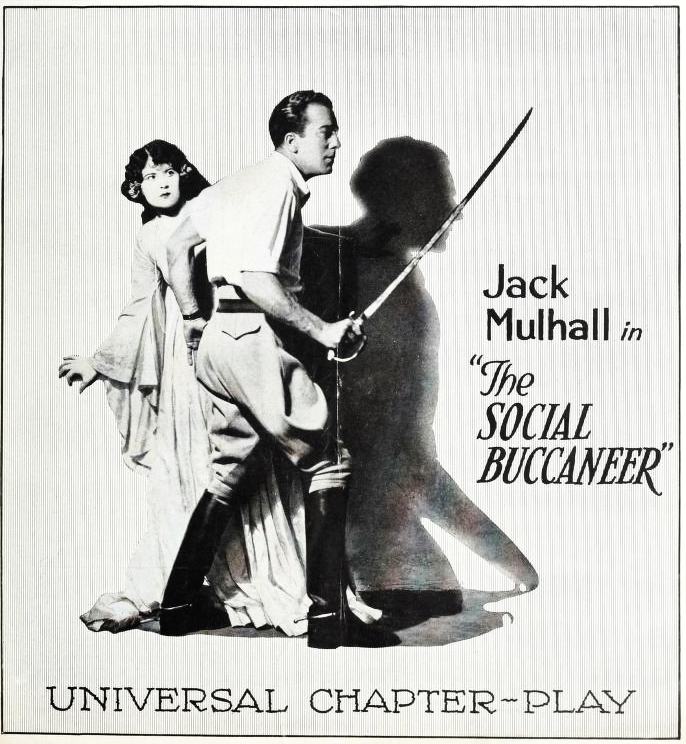
John "Jack" Norton (Jack Mulhall), before the war a society playboy and fop, returns from the trenches of World War One a two fisted American who finds his father, Raymond Norton (William Welsh), in jail, charged with theft of funds from the bank in which he was the president. The money, placed there by the American authorities for the Kingdom of Thorwald, and Princess Elise (Margaret Livingston), is on the way to collect it. John lets his father think he is still the playboy he was before the war, but secretly dons his old 'Doughboy" uniform and sets out after the gang that framed his father.
Decades after its release, The Social Buccaneer remains a vital piece of the cinematic puzzle. Its influence can be seen in countless modern works, solidifying Robert F. Hill's status as a master of the craft in United States and beyond.