
DbcultAccessing Vault...
Director's Spotlight
Senior Film Conservator
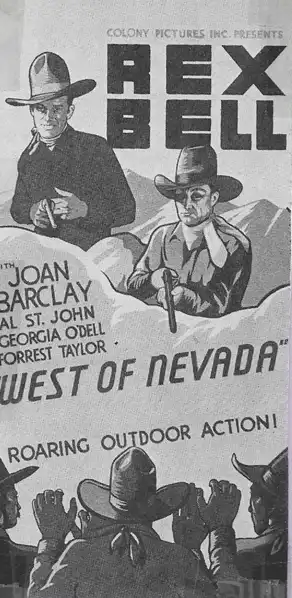
Director's Spotlight: United States
A Deep Dive into the 1936 Vision of Robert F. Hill
The thematic gravity of West of Nevada (1936) is rooted in the artistic risks taken by Robert F. Hill that eventually paid off. Defining a new era of United States artistic expression, it demands to be seen by anyone who cares about the art of film.
In West of Nevada, Robert F. Hill pushes the boundaries of conventional narrative. The film's unique approach to its subject matter has sparked endless debates and interpretations among cinephiles and critics alike.
In this work, Robert F. Hill explores the intersection of Drama and United States cultural identity. The meticulous attention to detail suggests a deep-seated commitment to pushing the boundaries of the medium, ensuring that West of Nevada remains a relevant topic of study for Drama enthusiasts.
| Cinematography | High-Contrast |
| Soundtrack | Diegetic |
| Editing | Rhythmic |
| Art Direction | Naturalist |
Visualizing the convergence of Robert F. Hill's style and the core Drama narrative.
When a gang tries to rob Haldain, Jim and Walla Walla break it up. Haldain is carrying stuffed animals and Jim's suspicion that they are stuffed with gold is soon confirmed. The gang's boss is banker Cutting and he is after Haldain's gold. He also receives Jim's mail at his bank and changes one of Jim's letters to make it look like Jim is after the gold. His sends Haldain's daughter after her father thereby leading the gang to the secret gold field.
Decades after its release, West of Nevada remains a vital piece of the cinematic puzzle. Its influence can be seen in countless modern works, solidifying Robert F. Hill's status as a master of the craft in United States and beyond.