
DbcultAccessing Vault...
Director's Spotlight
Senior Film Conservator
Director's Spotlight: United States
A Deep Dive into the 1924 Vision of Robert F. Hill
When we examine the cinematic landscape of United States, Young Ideas emerges as a landmark work of the enduring legacy of Robert F. Hill's artistic contribution to the genre. Through a lens of existential fatalism and Comedy tropes, it captures a specific kind of cinematic magic that is rarely replicated.
In Young Ideas, Robert F. Hill pushes the boundaries of conventional narrative. The film's unique approach to its subject matter has sparked endless debates and interpretations among cinephiles and critics alike.
While deeply rooted in United States, Young Ideas has achieved a global reach, influencing directors from various backgrounds. Its ability to translate Comedy tropes into a universal cinematic language is why it remains a cult staple decades after its 1924 release.
| Cinematography | Noir-Inspired |
| Soundtrack | Synth-Heavy |
| Editing | Rhythmic |
| Art Direction | Naturalist |
Visualizing the convergence of Robert F. Hill's style and the core Comedy narrative.
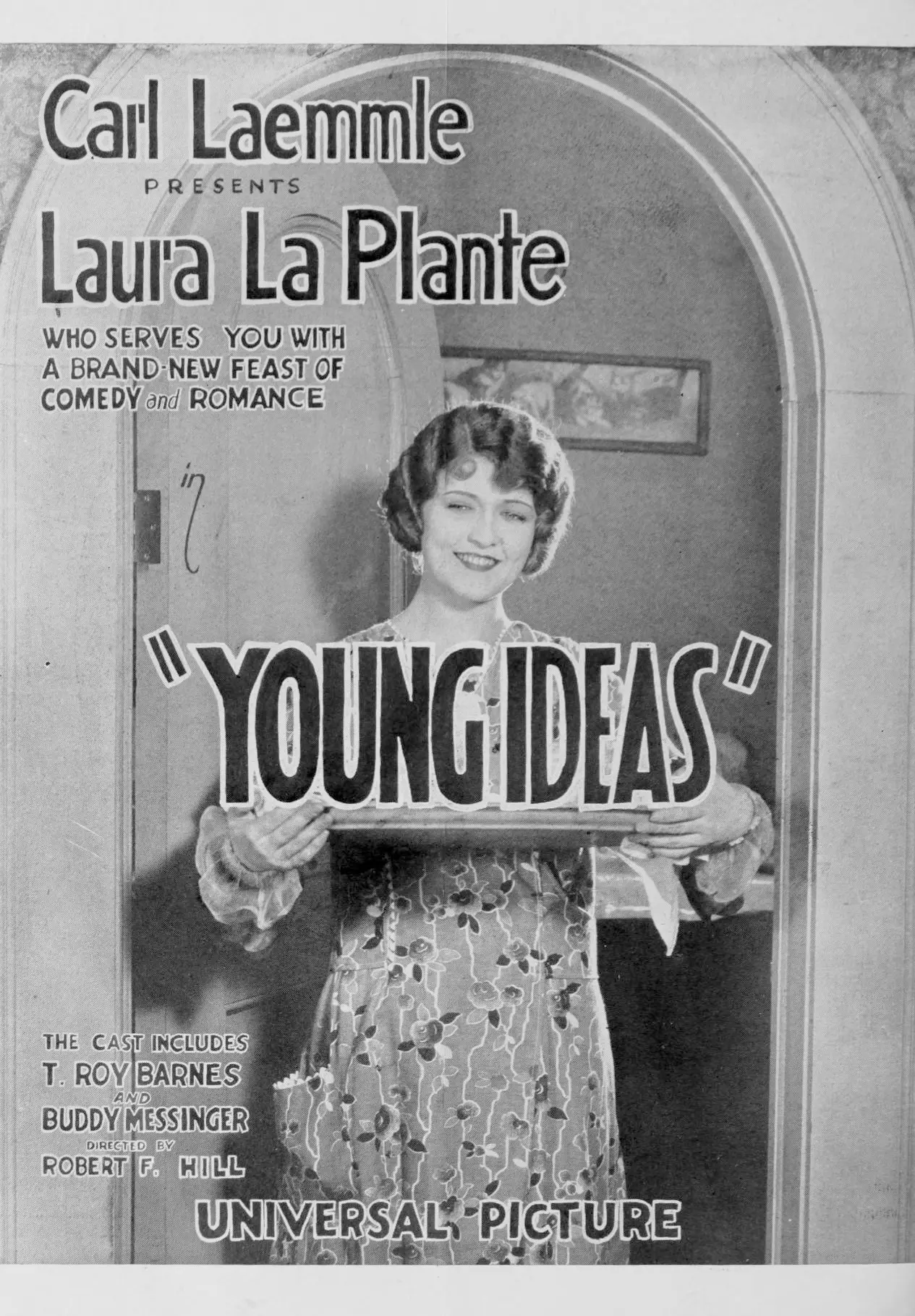
Octavia Lowden (La Plante) is the mainstay of a family consisting of Aunt Minnie (Titus), firmly convinced that she is "not long for this world," Eloise (Ricksen), a younger sister with a twisted disposition, Uncle Eph (Barrows), who fought with General Grant at Appomattox, Bob (Messinger), a kid brother with a sleep-and-mischief complex, and Grandma (Lee), the only regular sport in the outfit, but tied to her chair. Octavia is a photographer in Pritchett Spence's (Barnes) gallery and much, but hopelessly admired by Spence. With a family of sick people Octavia cannot give Spence a moment's attention. Finally he ventures to her house one Sunday afternoon, with such results that he is driven to a desperate trick. To get her away from her bloodsucking relatives, he sends her on an out-of-town assignment and then has a doctor friend quarantine the house. Detectives keep Octavia and the other inmates of the house within, and of course Octavia worries over her family, all of them probably starving or dying. As a matter of fact, they are all - but Grandma - at work, facing a realization that they either work or starve. Meanwhile, Spence and Dr. Hiram Smith sit back and chuckle - until Grandma gets sick. Then Spence goes to the country place to bring Octavia home, and has to whip the very detectives he put around the house because they do not know him. But a skunk releases the "prisoners" and in a short time Octavia finds herself at home - and a strange home it is, with Bob in overalls and Eloise and Aunt Minnie in aprons. And then Spence seeks forgiveness for his "trick" and receives punishment extraordinary - a life sentence with Octavia.
Decades after its release, Young Ideas remains a vital piece of the cinematic puzzle. Its influence can be seen in countless modern works, solidifying Robert F. Hill's status as a master of the craft in United States and beyond.