
DbcultAccessing Vault...
Director's Spotlight
Senior Film Conservator
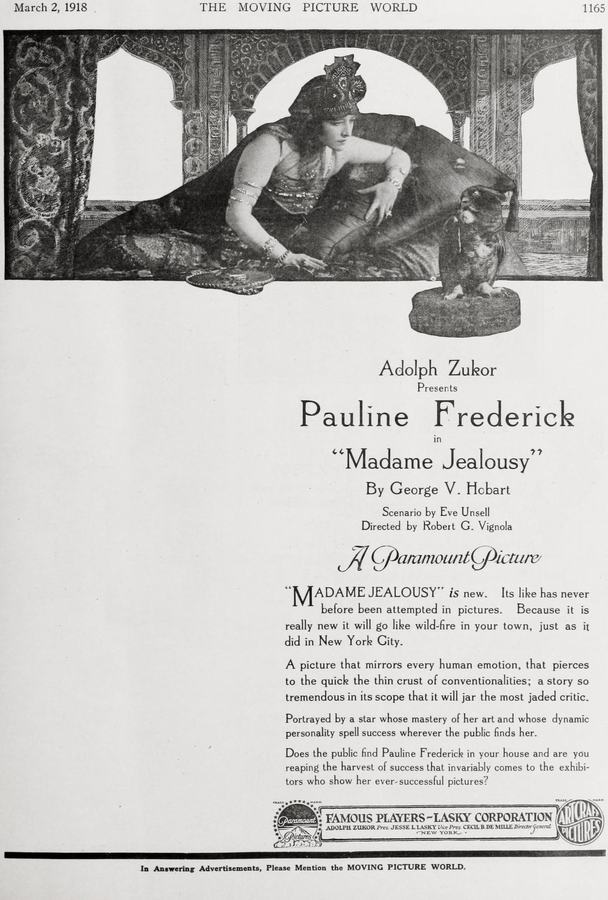
Director's Spotlight: United States
A Deep Dive into the 1918 Vision of Robert G. Vignola
Witnessing the stylistic transformation of cult through Madame Jealousy reveals the provocative questions that Robert G. Vignola poses to the United States audience. Exploring the nuances of the human condition with cult flair, it showcases the power of cult as a tool for social commentary.
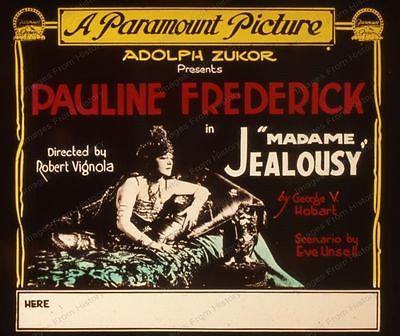
In Madame Jealousy, Robert G. Vignola pushes the boundaries of conventional narrative. The film's unique approach to its subject matter has sparked endless debates and interpretations among cinephiles and critics alike.
| Cinematography | Handheld |
| Soundtrack | Orchestral |
| Editing | Invisible |
| Art Direction | Kitsch |
Visualizing the convergence of Robert G. Vignola's style and the core cult narrative.
Charm and Valor fall in love and are married. Jealousy, however, is angry at their happiness and decides to ruin their marriage, so she arranges for Charm to find an old photograph of her husband's former sweetheart Forgotten. Valor is also led to mistrust Charm, and the two return to their respective parents: his, Finance and Display, and hers, Commerce and Pride. While Charm spends her days with Sorrow, Treachery endeavors to ruin Valor by luring him to a disreputable roadhouse, and when Valor's father tries to bring him home, the young man strikes his father with a bottle. The two sets of parents are in the midst of a financial battle when Charm gives birth to a child, Happiness. The child reunites the couple, and Madame Jealousy, along with her servants Mischief, Treachery and Rumor, finally are banished.
Decades after its release, Madame Jealousy remains a vital piece of the cinematic puzzle. Its influence can be seen in countless modern works, solidifying Robert G. Vignola's status as a master of the craft in United States and beyond.