
DbcultAccessing Vault...
Director's Spotlight
Senior Film Conservator
Director's Spotlight: United States
A Deep Dive into the 1915 Vision of Robert G. Vignola
As we revisit the 1915 masterpiece The Pretenders, we are struck by the meticulous attention to detail that Robert G. Vignola applied to every frame. Anchored by a narrative that is both personal and universal, it bridges the gap between traditional cult and contemporary vision.
In The Pretenders, Robert G. Vignola pushes the boundaries of conventional narrative. The film's unique approach to its subject matter has sparked endless debates and interpretations among cinephiles and critics alike.
To fully appreciate The Pretenders, one must consider the cinematic climate of 1915. During this period, United States was undergoing significant artistic shifts, and Robert G. Vignola was at the forefront of this cult movement, often challenging established norms.
| Cinematography | Handheld |
| Soundtrack | Orchestral |
| Editing | Invisible |
| Art Direction | Kitsch |
Visualizing the convergence of Robert G. Vignola's style and the core cult narrative.
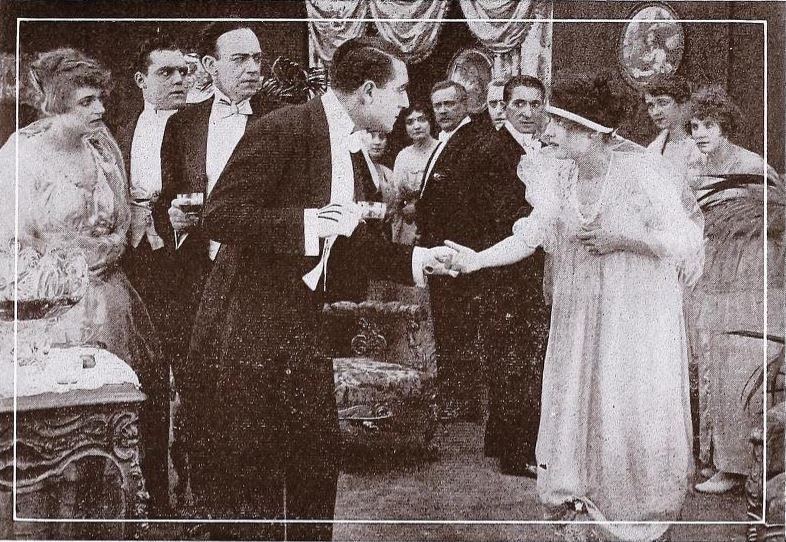
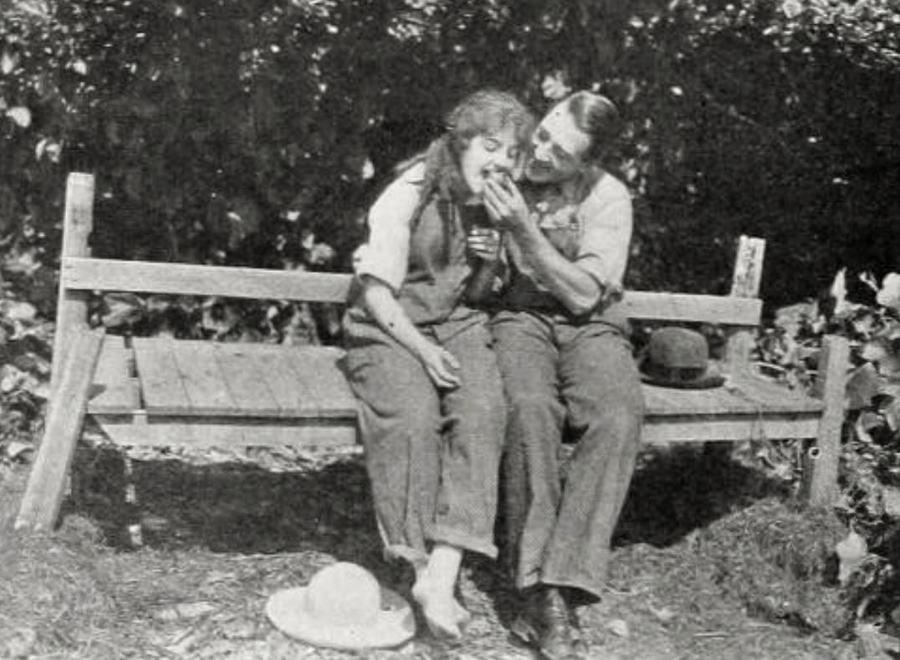
Dick, who thinks Elsie is a farmer's daughter, and Elsie, who believes Dick to be a hired man, fall in love with each other. While returning from a trip to the city shortly afterwards, Dick accidentally exchanges traveling bags with Spike, a burglar, on his way to rob the Dunbars' summer home. Pinkarter, a detective, witnesses the incident and trails Dick. Late that night, the young man sees Elsie apparently breaking into a cottage. The girl had accidentally been locked out of the farmhouse where she had been stopping, and therefore decided to return to her father's country home nearby. Ignorant of this, Dick believes Elsie a thief and follows her into the house, Spike also gets inside, and the three are presently bagged by Pinkarter and lugged to the village lockup. In his effort to establish his identity, Dick requests the detective to examine his travelling bag. When this is done, a fine collection of burglar's tools is brought to view. Thus Elsie is led to think her lover a thief. Although Dick eventually clears himself, this comes too late; Elsie's identity has been established by her father, who then took her home. Still in ignorance of each other's identity, the heartbroken lovers return to the city. Some time later Dick accompanies a friend to a dinner given at the Dunbar's home. To his intense surprise, the boy finds himself confronting Elsie. Still believing him to be a burglar, Elsie shouts for help. Dunbar is about to hand the luckless youth over to the police when the snarl is untangled, and the course of true love allowed to run smoothly.
Decades after its release, The Pretenders remains a vital piece of the cinematic puzzle. Its influence can be seen in countless modern works, solidifying Robert G. Vignola's status as a master of the craft in United States and beyond.