
DbcultAccessing Vault...
Director's Spotlight
Senior Film Conservator
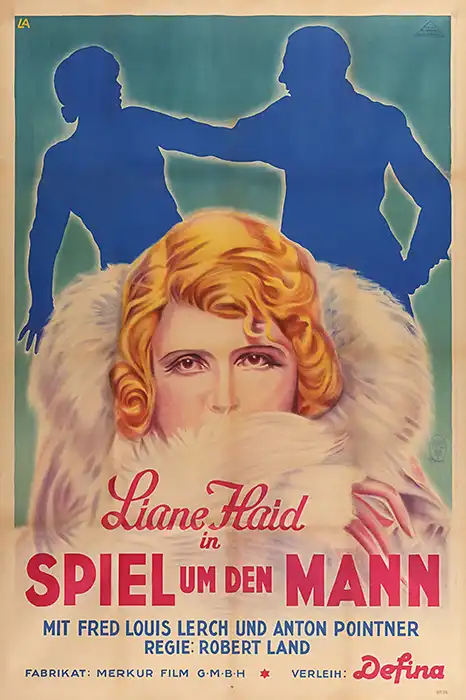
Director's Spotlight: Germany
A Deep Dive into the 1929 Vision of Robert Land
Witnessing the stylistic transformation of Comedy through Spiel um den Mann reveals the global recognition that Robert Land garnered after the release of Spiel um den Mann. Serving as a mirror to the anxieties of a changing world, offering layers of thematic complexity that demand repeated viewing.
In Spiel um den Mann, Robert Land pushes the boundaries of conventional narrative. The film's unique approach to its subject matter has sparked endless debates and interpretations among cinephiles and critics alike.
While deeply rooted in Germany, Spiel um den Mann has achieved a global reach, influencing directors from various backgrounds. Its ability to translate Comedy tropes into a universal cinematic language is why it remains a cult staple decades after its 1929 release.
| Cinematography | Deep Focus |
| Soundtrack | Synth-Heavy |
| Editing | Rhythmic |
| Art Direction | Naturalist |
Visualizing the convergence of Robert Land's style and the core Comedy narrative.
The Countess Nlizzi von Lehndorff, impoverished by the war, accepts an offer from a Private Detective Agency to recover a diamond stolen by Fred Sablon, a jewel thief of international reputation. To do this Mizzi has to travel about the Continent, and is pursued by Paul Riedl, who is in love with her. Mizzi cannot explain her movements to him, and he is tormented by jealousy. Unwittingly he helps her to achieve her purpose, for which he is amply rewarded.
Decades after its release, Spiel um den Mann remains a vital piece of the cinematic puzzle. Its influence can be seen in countless modern works, solidifying Robert Land's status as a master of the craft in Germany and beyond.