
DbcultAccessing Vault...
Director's Spotlight
Senior Film Conservator
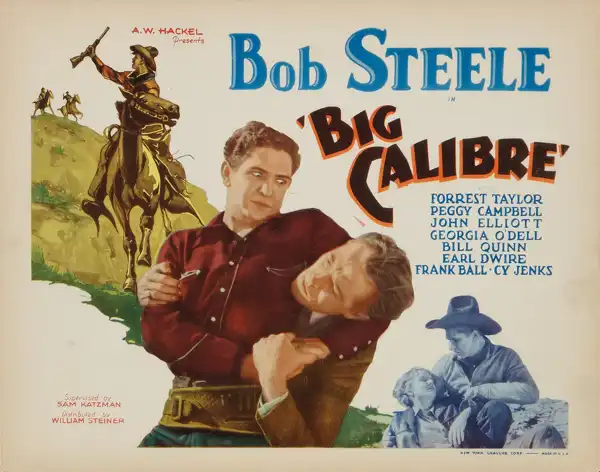
Director's Spotlight: United States
A Deep Dive into the 1935 Vision of Robert N. Bradbury
The 1935 release of Big Calibre marked a significant moment for the enduring legacy of Robert N. Bradbury's artistic contribution to the genre. By challenging the status quo of 1935 cinema, it has cemented its place in the global cult cinema archive.
In Big Calibre, Robert N. Bradbury pushes the boundaries of conventional narrative. The film's unique approach to its subject matter has sparked endless debates and interpretations among cinephiles and critics alike.
While deeply rooted in United States, Big Calibre has achieved a global reach, influencing directors from various backgrounds. Its ability to translate Western tropes into a universal cinematic language is why it remains a cult staple decades after its 1935 release.
| Cinematography | Deep Focus |
| Soundtrack | Minimalist |
| Editing | Disjunctive |
| Art Direction | Baroque |
Visualizing the convergence of Robert N. Bradbury's style and the core Western narrative.
Intent on avenging his father's murder, Roy Neal and his sidekick Rusty find themselves in the border town of Gladstone where Neal is mistakenly arrested for the robbery of a mail truck. After escaping, Neal joins up with pretty June Bowers whose father has apparently also been murdered. Neal, suspecting two of the town's leading businessmen of being the murderers, tries to flush them out before the sheriff can lock him up again.
Decades after its release, Big Calibre remains a vital piece of the cinematic puzzle. Its influence can be seen in countless modern works, solidifying Robert N. Bradbury's status as a master of the craft in United States and beyond.