
DbcultAccessing Vault...
Director's Spotlight
Senior Film Conservator
Director's Spotlight: United States
A Deep Dive into the 1921 Vision of Robert N. Bradbury
The brilliance of The Tempest (1921) is inseparable from a monumental shift in Short filmmaking spearheaded by Robert N. Bradbury. Occupying a unique space between Short and pure art, it serves as a blueprint for future generations of Short directors.
In The Tempest, Robert N. Bradbury pushes the boundaries of conventional narrative. The film's unique approach to its subject matter has sparked endless debates and interpretations among cinephiles and critics alike.
To fully appreciate The Tempest, one must consider the cinematic climate of 1921. During this period, United States was undergoing significant artistic shifts, and Robert N. Bradbury was at the forefront of this Short movement, often challenging established norms.
| Cinematography | Deep Focus |
| Soundtrack | Synth-Heavy |
| Editing | Disjunctive |
| Art Direction | Baroque |
Visualizing the convergence of Robert N. Bradbury's style and the core Short narrative.
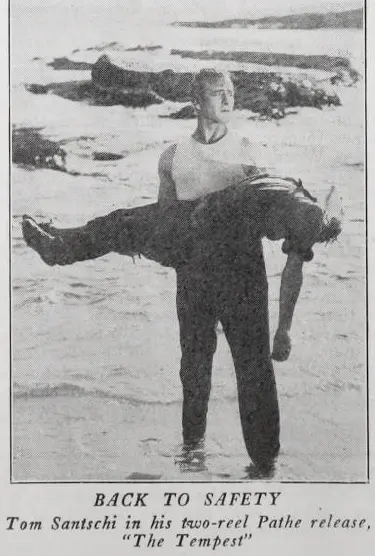
Tom appears as a wandering fellow, strolling on the docks. The crew of a schooner see him and he is promptly shanghaied, the captain having first thrown the hero's canine pal into the water. He recovers from the beating given him on board the vessel, but swears he will not work. The only friend he makes is a lad on the boat who has also been forcibly taken on board. During a storm the hero starts a mutiny and is thrown overboard. He lands near a lighthouse and is befriended by the sole inhabitants, the keeper of the light and his daughter. The hero falls in love with the girl and later thinks he has lost her when the boy from the schooner suddenly appears. He turns out to be her brother.
Decades after its release, The Tempest remains a vital piece of the cinematic puzzle. Its influence can be seen in countless modern works, solidifying Robert N. Bradbury's status as a master of the craft in United States and beyond.