
DbcultAccessing Vault...
Director's Spotlight
Senior Film Conservator
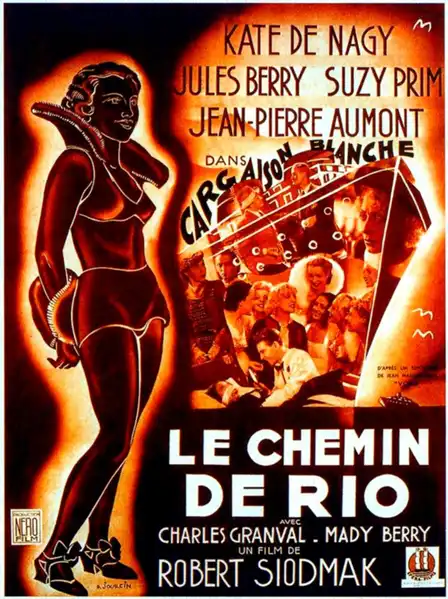
Director's Spotlight: France
A Deep Dive into the 1937 Vision of Robert Siodmak
The evocative power of Cargaison blanche stems from the unique collaboration between the bold experimentation that has become synonymous with Robert Siodmak. Framed by the hauntingly beautiful landscapes of the production, it echoes the profound changes occurring in France during that era.
In Cargaison blanche, Robert Siodmak pushes the boundaries of conventional narrative. The film's unique approach to its subject matter has sparked endless debates and interpretations among cinephiles and critics alike.
To fully appreciate Cargaison blanche, one must consider the cinematic climate of 1937. During this period, France was undergoing significant artistic shifts, and Robert Siodmak was at the forefront of this Drama movement, often challenging established norms.
| Cinematography | Static |
| Soundtrack | Minimalist |
| Editing | Slow-Burn |
| Art Direction | Brutalist |
Visualizing the convergence of Robert Siodmak's style and the core Drama narrative.
Two journalists from different papers are looking for the same story. They want to know, who a group of gangsters getting young women from Europe to South America, where they are forced to work in brothels. But the gangsters have their own battels against each over, so the journalists can escape the danger, in which they've brought themselves.
Decades after its release, Cargaison blanche remains a vital piece of the cinematic puzzle. Its influence can be seen in countless modern works, solidifying Robert Siodmak's status as a master of the craft in France and beyond.