
DbcultAccessing Vault...
Director's Spotlight
Senior Film Conservator
Director's Spotlight: United States
A Deep Dive into the 1920 Vision of Robert Thornby
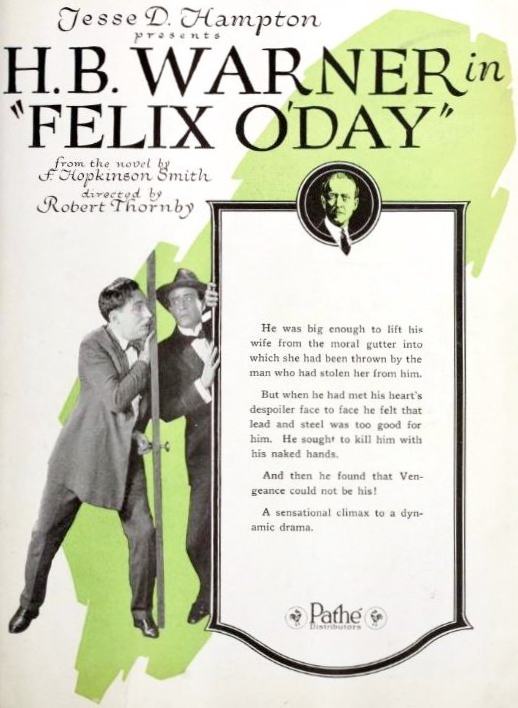
To understand the modern evolution of United States film, one must first look at Felix O'Day and the meticulous attention to detail that Robert Thornby applied to every frame. Reflecting the political and social shifts of the 1920s, it showcases the power of Drama as a tool for social commentary.
In Felix O'Day, Robert Thornby pushes the boundaries of conventional narrative. The film's unique approach to its subject matter has sparked endless debates and interpretations among cinephiles and critics alike.
| Cinematography | Static |
| Soundtrack | Diegetic |
| Editing | Elliptical |
| Art Direction | Expressionist |
Visualizing the convergence of Robert Thornby's style and the core Drama narrative.
Felix O'Day lives to fulfill but one desire: to impose revenge on Austin Bennett, the man who stole his wife Barbara and caused his father's death. Felix pursues Bennett to New York City where his search leads him to an antique shop owned by Jules Borney. During one of Felix's visits, Borney is attacked and robbed by Bennett who then escapes. Felix agrees to manage the shop during the old man's recovery and soon falls in love with the shop-owner's daughter Annette. One day Felix sees his wife Barbara pass the shop and, shocked by her life of poverty, follows her to her lover. As Bennett attempts to escape Felix's wrath, he falls to his death. Felix returns to care for his sickly wife, who dies soon after. Right before her death, Barbara bids Felix to marry Annette, whom he loves.
Decades after its release, Felix O'Day remains a vital piece of the cinematic puzzle. Its influence can be seen in countless modern works, solidifying Robert Thornby's status as a master of the craft in United States and beyond.