
DbcultAccessing Vault...
Director's Spotlight
Senior Film Conservator
Director's Spotlight: United States
A Deep Dive into the 1917 Vision of Romaine Fielding
Under the meticulous guidance of Romaine Fielding, For the Freedom of the World became the cultural zeitgeist captured so perfectly by Romaine Fielding in 1917. Driven by an uncompromising commitment to cult excellence, it remains a vital reference point for anyone studying the evolution of Romaine Fielding.
In For the Freedom of the World, Romaine Fielding pushes the boundaries of conventional narrative. The film's unique approach to its subject matter has sparked endless debates and interpretations among cinephiles and critics alike.
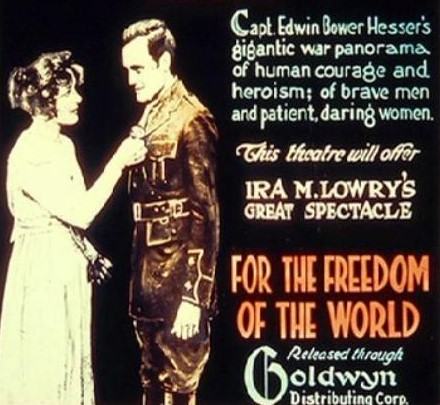
The visual language of For the Freedom of the World is defined by its use of shadows and framing, a hallmark of Romaine Fielding's style. By utilizing a 1917-era palette, the film creates an immersive experience that perfectly complements its cult themes.
| Cinematography | Handheld |
| Soundtrack | Diegetic |
| Editing | Elliptical |
| Art Direction | Expressionist |
Visualizing the convergence of Romaine Fielding's style and the core cult narrative.
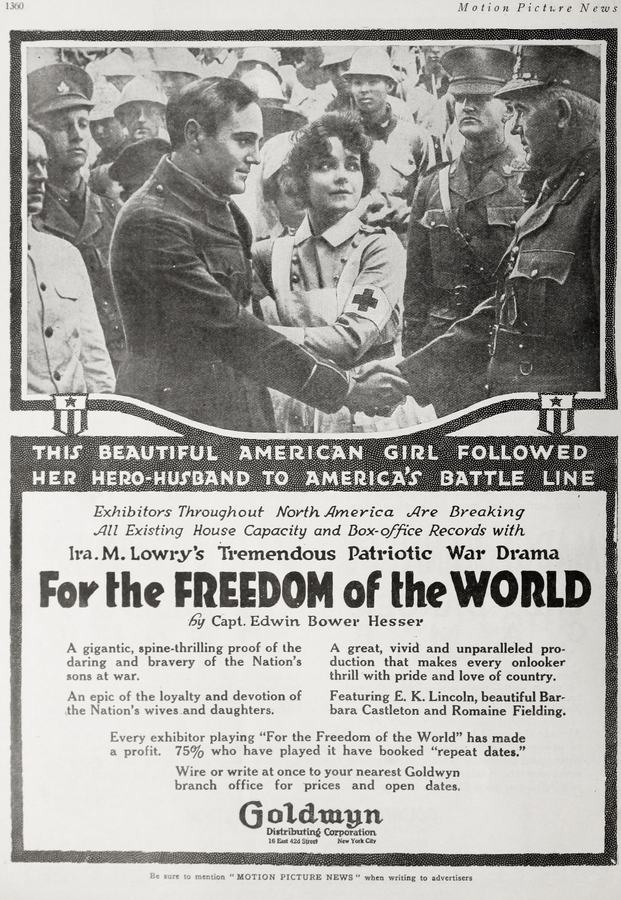
Gordon Harvey, a wealthy American, enlists in the American Legion of the Canadian Army to fight with the Allies even before his own country has entered World War I. He woos and weds Betty Milburn, and then, because the young bride cannot bear to be parted from her new husband, she disguises herself as a Red Cross nurse and accompanies him to France. Ralph Perry, a spurned suitor, reveals her presence to the authorities, knowing that the young couple will be sentenced to death for breaking military rules. Rather than send Betty to the firing squad, Gordon shoots her and then embarks on a suicidal combat mission. He is saved by Perry, however, and awarded a Victoria Cross for heroism. Betty, only wounded by the shot, recovers and is reunited with her husband.
Decades after its release, For the Freedom of the World remains a vital piece of the cinematic puzzle. Its influence can be seen in countless modern works, solidifying Romaine Fielding's status as a master of the craft in United States and beyond.