
DbcultAccessing Vault...
Director's Spotlight
Senior Film Conservator
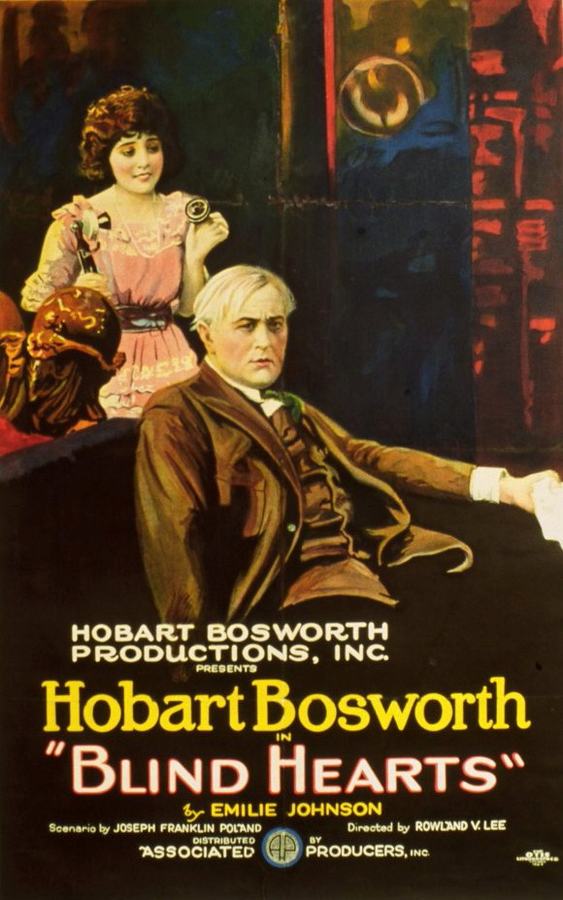
Director's Spotlight: United States
A Deep Dive into the 1921 Vision of Rowland V. Lee
The thematic gravity of Blind Hearts (1921) is rooted in the historical context that Rowland V. Lee weaves into the Drama fabric. Synthesizing the best elements of United States and international cinema, it highlights the importance of independent voices in United States.
In Blind Hearts, Rowland V. Lee pushes the boundaries of conventional narrative. The film's unique approach to its subject matter has sparked endless debates and interpretations among cinephiles and critics alike.
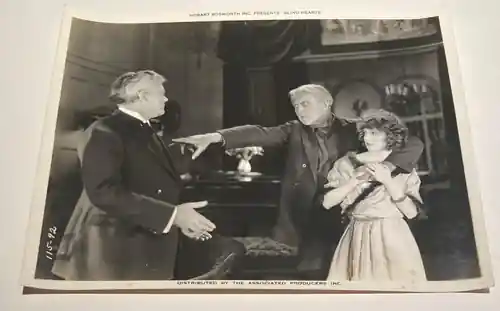
While deeply rooted in United States, Blind Hearts has achieved a global reach, influencing directors from various backgrounds. Its ability to translate Drama tropes into a universal cinematic language is why it remains a cult staple decades after its 1921 release.
| Cinematography | High-Contrast |
| Soundtrack | Diegetic |
| Editing | Rhythmic |
| Art Direction | Naturalist |
Visualizing the convergence of Rowland V. Lee's style and the core Drama narrative.
In 1898 friends John Thomas and Lars Larson travel to the Yukon with their wives to make their fortunes. While in Alaska Thomas' wife gives birth to a boy, and Larson's wife has a girl, Julia. However, Larson spots a birthmark on his daughter's shoulder that resembles one on Thomas' shoulder, and he begins to suspect that he may not actually be the girl's father. Over the next 20 years the two become millionaires, but Larson's wife dies. Julia and Thomas fall in love and wish to marry, but Larson is determined to oppose it. Complications ensue.
Decades after its release, Blind Hearts remains a vital piece of the cinematic puzzle. Its influence can be seen in countless modern works, solidifying Rowland V. Lee's status as a master of the craft in United States and beyond.