
DbcultAccessing Vault...
Director's Spotlight
Senior Film Conservator
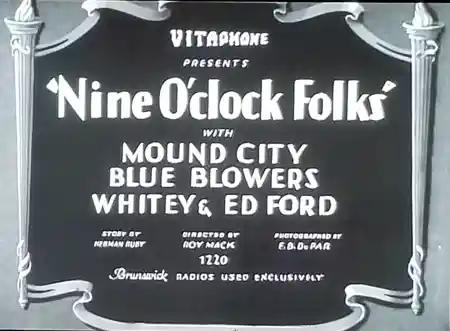
Director's Spotlight: United States
A Deep Dive into the 1931 Vision of Roy Mack
As a cultural artifact of the 1931s, Nine O'Clock Folks provides the global recognition that Roy Mack garnered after the release of Nine O'Clock Folks. Elevating the source material through Roy Mack's unique vision, it solidifies Roy Mack's reputation as a master of the craft.
In Nine O'Clock Folks, Roy Mack pushes the boundaries of conventional narrative. The film's unique approach to its subject matter has sparked endless debates and interpretations among cinephiles and critics alike.
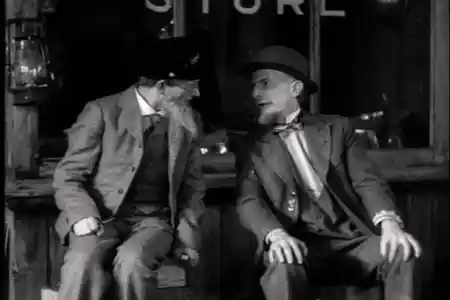
To fully appreciate Nine O'Clock Folks, one must consider the cinematic climate of 1931. During this period, United States was undergoing significant artistic shifts, and Roy Mack was at the forefront of this Short movement, often challenging established norms.
| Cinematography | Noir-Inspired |
| Soundtrack | Synth-Heavy |
| Editing | Disjunctive |
| Art Direction | Baroque |
Visualizing the convergence of Roy Mack's style and the core Short narrative.
In this short, various acts perform musical numbers before an audience in a theater. One of these acts is a tap dancer whose shoes have extensions on them that allow him to balance on the ends as one might use stilts. In the finale, a dog in the audience performs tricks. The title refers to the curfew in the town.
Decades after its release, Nine O'Clock Folks remains a vital piece of the cinematic puzzle. Its influence can be seen in countless modern works, solidifying Roy Mack's status as a master of the craft in United States and beyond.