
DbcultAccessing Vault...
Director's Spotlight
Senior Film Conservator
Director's Spotlight: United States
A Deep Dive into the 1936 Vision of Roy Mack
As a cultural artifact of the 1936s, The Black Network provides the global recognition that Roy Mack garnered after the release of The Black Network. Elevating the source material through Roy Mack's unique vision, it solidifies Roy Mack's reputation as a master of the craft.
In The Black Network, Roy Mack pushes the boundaries of conventional narrative. The film's unique approach to its subject matter has sparked endless debates and interpretations among cinephiles and critics alike.
The visual language of The Black Network is defined by its use of shadows and framing, a hallmark of Roy Mack's style. By utilizing a 1936-era palette, the film creates an immersive experience that perfectly complements its Musical themes.
| Cinematography | High-Contrast |
| Soundtrack | Experimental |
| Editing | Invisible |
| Art Direction | Kitsch |
Visualizing the convergence of Roy Mack's style and the core Musical narrative.
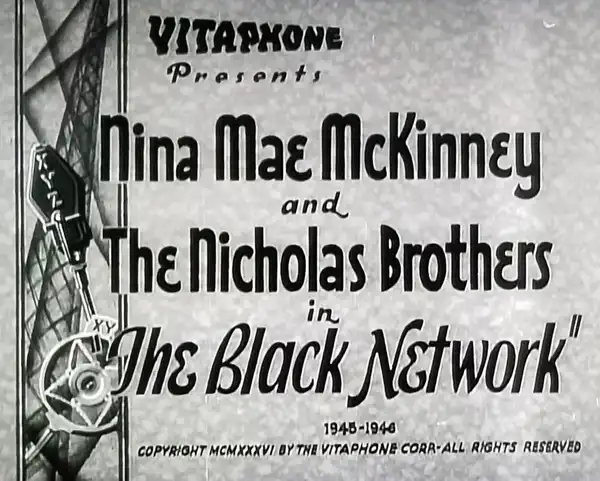
Brutus Johnson, owner of the Porter Pullman Shoe Polish Company, sponsors the Porter Pullman Shoe Polish Variety Program on the Black Network Broadcasting Co. Mezzanine Johnson, Brutus' controlling wife, has her own views of what she would like to happen on the show, she who believes has the right since it is her father who put up the money for the business. Mezzanine wants to take over the lead female singer spot from Nina Mae McKinney. This news does not sit well with Brutus, who still cannot control what his wife does. It also does not sit well with either Nina or Emmett 'Babe' Wallace, her male counterpart, the two who see themselves as a team and who learn the news through the grapevine. As the show continues and Mezzanine plots her take-over, Nina Mae and Babe have to figure out what to do to save their spots and to save the show. Nina Mae and Babe may get some unwitting help from The Nicholas Brothers, who plan to audition for the amateur segment of the show but who sell lucky number tickets as their regular business, and the radio listening public.
Decades after its release, The Black Network remains a vital piece of the cinematic puzzle. Its influence can be seen in countless modern works, solidifying Roy Mack's status as a master of the craft in United States and beyond.