
DbcultAccessing Vault...
Director's Spotlight
Senior Film Conservator
Director's Spotlight: United States
A Deep Dive into the 1935 Vision of Roy Mack
The evocative power of The Wishing Stone stems from the unique collaboration between the subversive storytelling techniques employed by Roy Mack in 1935. Synthesizing the best elements of United States and international cinema, it reminds us of the fragility and beauty of the 1935s.
In The Wishing Stone, Roy Mack pushes the boundaries of conventional narrative. The film's unique approach to its subject matter has sparked endless debates and interpretations among cinephiles and critics alike.
The visual language of The Wishing Stone is defined by its use of shadows and framing, a hallmark of Roy Mack's style. By utilizing a 1935-era palette, the film creates an immersive experience that perfectly complements its Comedy themes.
| Cinematography | High-Contrast |
| Soundtrack | Orchestral |
| Editing | Invisible |
| Art Direction | Kitsch |
Visualizing the convergence of Roy Mack's style and the core Comedy narrative.
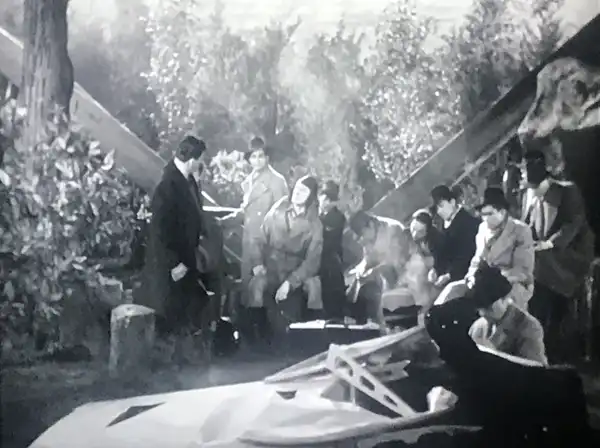
A commercial passenger jet has gone missing on its flight from Mexico to New York. In reality, the plane did crash, but everyone aboard is physically unhurt. One of the passengers, musician Dave Apollon, is concerned about the money he will be losing if he doesn't get to New York to perform in his scheduled gigs. When one of the other passengers tells him that they can get there using his magical Hawaiian wishing stone, Dave balks at the notion. But when someone else demonstrates the stone's power by wishing they were some place else, they are whisked from place to place. At each stop, Dave and the others perform a musical revue themed to their locale. But as Dave doesn't have the stone, will they ever make it to New York?
Decades after its release, The Wishing Stone remains a vital piece of the cinematic puzzle. Its influence can be seen in countless modern works, solidifying Roy Mack's status as a master of the craft in United States and beyond.