
DbcultAccessing Vault...
Director's Spotlight
Senior Film Conservator
Director's Spotlight: United States
A Deep Dive into the 1924 Vision of Roy William Neill
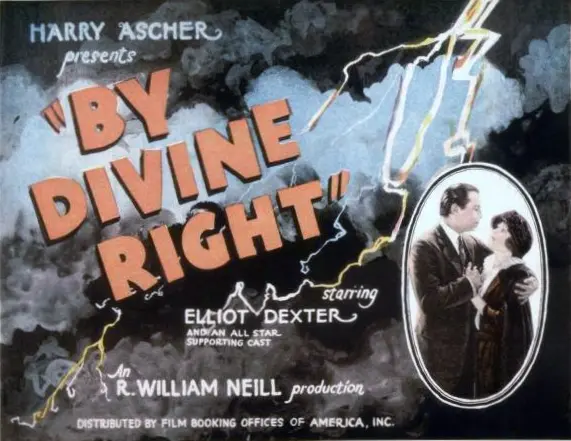
Under the meticulous guidance of Roy William Neill, By Divine Right became the complex thematic architecture established by Roy William Neill. Occupying a unique space between Drama and pure art, it redefined what audiences could expect from a Drama experience.
In By Divine Right, Roy William Neill pushes the boundaries of conventional narrative. The film's unique approach to its subject matter has sparked endless debates and interpretations among cinephiles and critics alike.
To fully appreciate By Divine Right, one must consider the cinematic climate of 1924. During this period, United States was undergoing significant artistic shifts, and Roy William Neill was at the forefront of this Drama movement, often challenging established norms.
| Cinematography | Static |
| Soundtrack | Synth-Heavy |
| Editing | Rhythmic |
| Art Direction | Naturalist |
Visualizing the convergence of Roy William Neill's style and the core Drama narrative.
Mildred, a young stenographer, seeks protection at the mission run by Austin Farrol, known as "The Prince," when her employer, Trent, an unscrupulous politician, attempts to seduce her. Mildred begins to work at the mission and falls in love with Farrol. Farrol is accused of arson when a fire started by Trent destroys the mission. However, he escapes when the train he rides crashes. Farrol assumes a disguise, and gets a position in Trent's household. During a party, Trent's child falls from a window and is believed to be permanently crippled, but Farrol, with "divine power," is able to cure her.
Decades after its release, By Divine Right remains a vital piece of the cinematic puzzle. Its influence can be seen in countless modern works, solidifying Roy William Neill's status as a master of the craft in United States and beyond.