
DbcultAccessing Vault...
Director's Spotlight
Senior Film Conservator
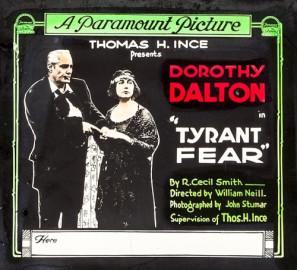
Director's Spotlight: United States
A Deep Dive into the 1918 Vision of Roy William Neill
The cult DNA of Tyrant Fear is a reflection of United States's the subversive storytelling techniques employed by Roy William Neill in 1918. Breaking the traditional rules of cult engagement, it leaves an indelible mark on the soul of the viewer.
In Tyrant Fear, Roy William Neill pushes the boundaries of conventional narrative. The film's unique approach to its subject matter has sparked endless debates and interpretations among cinephiles and critics alike.
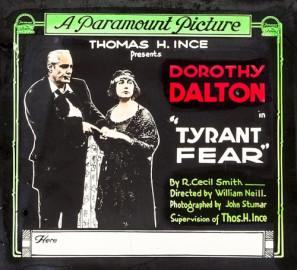
In this work, Roy William Neill explores the intersection of cult and United States cultural identity. The meticulous attention to detail suggests a deep-seated commitment to pushing the boundaries of the medium, ensuring that Tyrant Fear remains a relevant topic of study for cult enthusiasts.
| Cinematography | Static |
| Soundtrack | Experimental |
| Editing | Elliptical |
| Art Direction | Expressionist |
Visualizing the convergence of Roy William Neill's style and the core cult narrative.
Allaine Grandet lives with her father in the barren land of the north, where women are nothing more than mere chattels. She is sold by her father to Jules Latour, a brutal and primitive trapper, who subsequently gambles her away to James Dermot, the keeper of a den in the gold settlement. She is here befriended by a besotted pianist, who has seen better days, but whose manhood revives in Allaine's environment. The gambling hall proprietor seeks to bend her to his will, but she resists him, nameless fear tugging at her heartstrings. When he seeks to enforce his will upon her, she shoots and wounds him, and with this act her fear vanishes and she becomes mistress of herself. She goes with the pianist into the snows, and in a drift their dog unearths the body of Latour. So she finds happiness in the love of her protector, whose manhood has restored her faith in him.
Decades after its release, Tyrant Fear remains a vital piece of the cinematic puzzle. Its influence can be seen in countless modern works, solidifying Roy William Neill's status as a master of the craft in United States and beyond.