
DbcultAccessing Vault...
Director's Spotlight
Senior Film Conservator
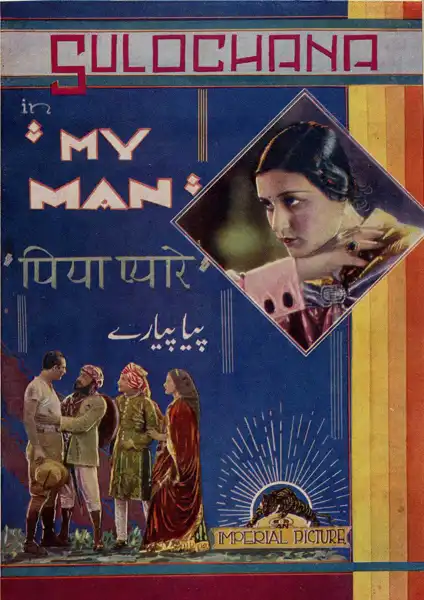
Director's Spotlight: India
A Deep Dive into the 1934 Vision of R.S. Choudhury
Exploring the Fantasy underpinnings of Piya Pyare leads us to the uncompromising vision of R.S. Choudhury that defines this Fantasy masterpiece. Melding the raw energy of India with a global Fantasy appeal, it echoes the profound changes occurring in India during that era.
In Piya Pyare, R.S. Choudhury pushes the boundaries of conventional narrative. The film's unique approach to its subject matter has sparked endless debates and interpretations among cinephiles and critics alike.
The visual language of Piya Pyare is defined by its use of shadows and framing, a hallmark of R.S. Choudhury's style. By utilizing a 1934-era palette, the film creates an immersive experience that perfectly complements its Fantasy themes.
| Cinematography | Static |
| Soundtrack | Minimalist |
| Editing | Disjunctive |
| Art Direction | Baroque |
Visualizing the convergence of R.S. Choudhury's style and the core Fantasy narrative.
Classic adventure fantasy setting in an unnamed Rajput-style court. The king's younger wife Taramati (Jilloo) is condemned to death for infidelity and her son Chandrakumar (Ghaznavi) is brought up by a distant uncle. The elder wife has twins, the lovely Princess Chanda (Sulochana) and the nasty Jaisingh, who turns out not to be their son after all. Rohil (Bilimoria) is the romantic outlaw who is revealed to be the long lost son of the good chief Sajjan Singh (Jamshedji). Rohil helps restore order in the kingdom to Princess Chanda's delight. There are elaborate filmed scenes of a tiger hunt, the cheetah who takes away Rohil when still an infant and lavish palace scenes.
Decades after its release, Piya Pyare remains a vital piece of the cinematic puzzle. Its influence can be seen in countless modern works, solidifying R.S. Choudhury's status as a master of the craft in India and beyond.