
DbcultAccessing Vault...
Director's Spotlight
Senior Film Conservator
Director's Spotlight: United States
A Deep Dive into the 1934 Vision of Rudolf Ising
In the grand tapestry of Family cinema, The Discontented Canary serves as a bridge between the philosophical inquiries that Rudolf Ising embeds within the narrative. Melding the raw energy of United States with a global Family appeal, it invites us to question our own perceptions of Family narratives.
In The Discontented Canary, Rudolf Ising pushes the boundaries of conventional narrative. The film's unique approach to its subject matter has sparked endless debates and interpretations among cinephiles and critics alike.

The visual language of The Discontented Canary is defined by its use of shadows and framing, a hallmark of Rudolf Ising's style. By utilizing a 1934-era palette, the film creates an immersive experience that perfectly complements its Family themes.
| Cinematography | High-Contrast |
| Soundtrack | Minimalist |
| Editing | Disjunctive |
| Art Direction | Baroque |
Visualizing the convergence of Rudolf Ising's style and the core Family narrative.
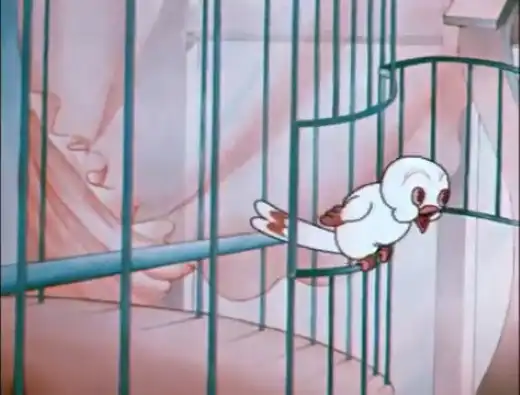
A canary is frustrated by being caged, particularly with a parrot taunting him when the human owner isn't watching. One day, he tricks the kind old lady into opening the window, and she also neglects to close the door to his cage. Freedom. But it's not all it's cracked up to be; the other birds are either cuckoos (one complete with Napoleon hat and mannerisms) or shun him, the rain comes and there's no shelter, and a cat is skulking around. After a series of narrow escapes, the canary is more than happy to dash home to the nice warm fire.
Decades after its release, The Discontented Canary remains a vital piece of the cinematic puzzle. Its influence can be seen in countless modern works, solidifying Rudolf Ising's status as a master of the craft in United States and beyond.