
DbcultAccessing Vault...
Director's Spotlight
Senior Film Conservator
Director's Spotlight: United States
A Deep Dive into the 1933 Vision of Rudolf Ising
Under the meticulous guidance of Rudolf Ising, The Dish Ran Away with the Spoon became the cultural zeitgeist captured so perfectly by Rudolf Ising in 1933. Driven by an uncompromising commitment to Comedy excellence, it remains a vital reference point for anyone studying the evolution of Rudolf Ising.
In The Dish Ran Away with the Spoon, Rudolf Ising pushes the boundaries of conventional narrative. The film's unique approach to its subject matter has sparked endless debates and interpretations among cinephiles and critics alike.
| Cinematography | Deep Focus |
| Soundtrack | Orchestral |
| Editing | Slow-Burn |
| Art Direction | Brutalist |
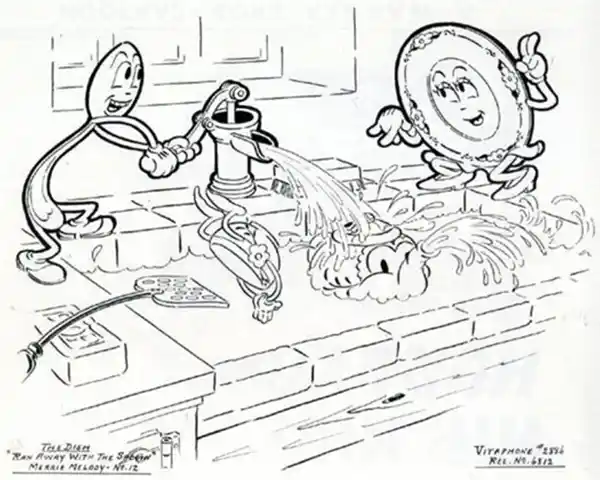
Visualizing the convergence of Rudolf Ising's style and the core Comedy narrative.
Dishes and utensils wash, dry, and stack themselves. A duster plays a silverware box like a piano while a salt-pepper-and-sugar set sings. The spoon proposes to the dish (interrupted by a cry from a baby spoon), then plays percussion on some pans and jam jars. Some teacups do a can-can, then a centipede-like conga line. The Swiss cheese yodels. The blueing sings "Am I Blue?," joined by a potato crying from all its eyes. An egg dances, slips on some lard, hatches, and sings "Young and Healthy." A lump of dough rises like a ghost and dances over to a packet of yeast, which it mixes into water and drinks, then grows, a la Jekyll and Hyde. It threatens the dish; some utensils fight back, lobbing canned goods from a spatula catapult. More attacks with cheese graters, popcorn, a rolling pin, and an electric fan, turn the dough into muffins, a bundt cake, a pie, and waffles.
Decades after its release, The Dish Ran Away with the Spoon remains a vital piece of the cinematic puzzle. Its influence can be seen in countless modern works, solidifying Rudolf Ising's status as a master of the craft in United States and beyond.