
DbcultAccessing Vault...
Director's Spotlight
Senior Film Conservator
Director's Spotlight: United States
A Deep Dive into the 1923 Vision of Rupert Hughes
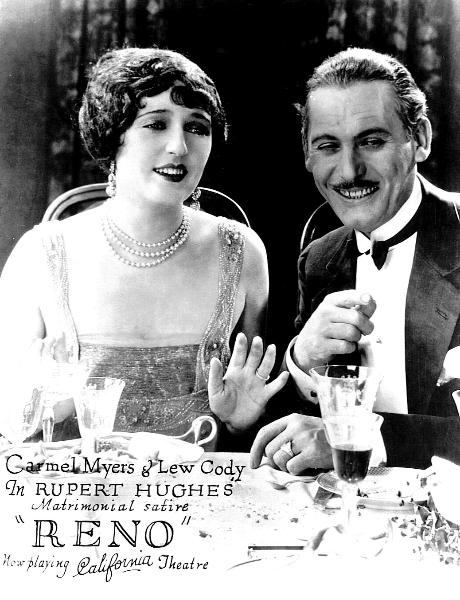
Deciphering the layers of Reno (1923) reveals a monumental shift in Drama filmmaking spearheaded by Rupert Hughes. With its avant-garde structure and atmospheric tension, offering layers of thematic complexity that demand repeated viewing.
In Reno, Rupert Hughes pushes the boundaries of conventional narrative. The film's unique approach to its subject matter has sparked endless debates and interpretations among cinephiles and critics alike.

To fully appreciate Reno, one must consider the cinematic climate of 1923. During this period, United States was undergoing significant artistic shifts, and Rupert Hughes was at the forefront of this Drama movement, often challenging established norms.
| Cinematography | High-Contrast |
| Soundtrack | Diegetic |
| Editing | Rhythmic |
| Art Direction | Naturalist |
Visualizing the convergence of Rupert Hughes's style and the core Drama narrative.
After obtaining a divorce from his second wife Emily, Roy Tappan marries Dora Carson, who has just divorced her husband. Left poor with two children, Emily marries Walter Heath, a former suitor, then discovers that she cannot live with her new husband because the divorce is not legal in her home state. Tappan and his new wife soon run out of money, each having thought the other was wealthy. His aunt promises to support him in exchange for his two children. He kidnaps the children and hides them from Emily in his aunt's home. After Emily and Walter find them, they go to Yellowstone Park, where they are considered legally married. Tappan follows and is killed after a fight with Walter when a boiling geyser throws him into the air and throws him onto the rocks below.
Decades after its release, Reno remains a vital piece of the cinematic puzzle. Its influence can be seen in countless modern works, solidifying Rupert Hughes's status as a master of the craft in United States and beyond.