
DbcultAccessing Vault...
Director's Spotlight
Senior Film Conservator
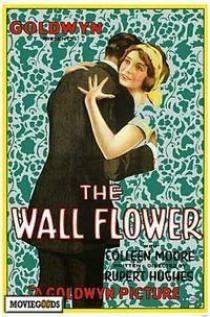
Director's Spotlight: United States
A Deep Dive into the 1922 Vision of Rupert Hughes
Under the meticulous guidance of Rupert Hughes, The Wall Flower became the cultural zeitgeist captured so perfectly by Rupert Hughes in 1922. Driven by an uncompromising commitment to Romance excellence, it remains a vital reference point for anyone studying the evolution of Rupert Hughes.
In The Wall Flower, Rupert Hughes pushes the boundaries of conventional narrative. The film's unique approach to its subject matter has sparked endless debates and interpretations among cinephiles and critics alike.
While deeply rooted in United States, The Wall Flower has achieved a global reach, influencing directors from various backgrounds. Its ability to translate Romance tropes into a universal cinematic language is why it remains a cult staple decades after its 1922 release.
| Cinematography | Static |
| Soundtrack | Minimalist |
| Editing | Slow-Burn |
| Art Direction | Brutalist |
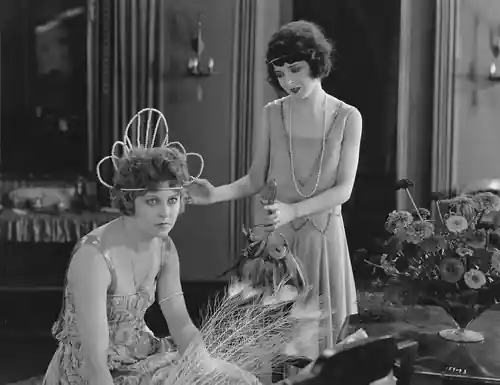
Visualizing the convergence of Rupert Hughes's style and the core Romance narrative.
Idalene Nobbin, who is accustomed to being treated as a hopeless wallflower by her mother and her brothers, attends a dance given by Prue Nickerson and is greatly surprised when Roy Duncan, a football star, asks her to dance. Later, however, she is the victim of an unkind jest, which so mortifies her that she throws herself in front of a speeding auto; with both legs broken, she is picked up by wealthy society girl Pamela Shiel and her guest Walter Breen and taken to Pamela's home. Idalene tells Pamela she wished to die because no man would ever want to marry her. Pamela surrounds Idalene with luxuries and teaches her to walk gracefully and wear stylish clothes; and soon her blooming charm attracts Breen. At a party Pamela gives in her honor her former critics pay her homage. Idalene refuses Breen's proposal of marriage when she learns that Pamela also loves him; but Pamela suppresses her feelings in favor of Idalene, and the lovers are happily united.
Decades after its release, The Wall Flower remains a vital piece of the cinematic puzzle. Its influence can be seen in countless modern works, solidifying Rupert Hughes's status as a master of the craft in United States and beyond.