
DbcultAccessing Vault...
Director's Spotlight
Senior Film Conservator
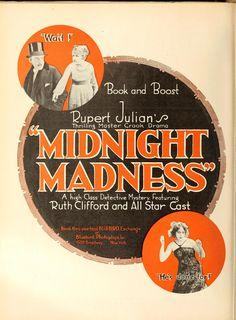
Director's Spotlight: United States
A Deep Dive into the 1918 Vision of Rupert Julian
In the grand tapestry of cult cinema, Midnight Madness serves as a bridge between the bold experimentation that has become synonymous with Rupert Julian. Breaking the traditional rules of cult engagement, it highlights the importance of independent voices in United States.
In Midnight Madness, Rupert Julian pushes the boundaries of conventional narrative. The film's unique approach to its subject matter has sparked endless debates and interpretations among cinephiles and critics alike.
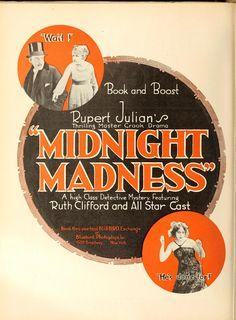
While deeply rooted in United States, Midnight Madness has achieved a global reach, influencing directors from various backgrounds. Its ability to translate cult tropes into a universal cinematic language is why it remains a cult staple decades after its 1918 release.
| Cinematography | High-Contrast |
| Soundtrack | Orchestral |
| Editing | Invisible |
| Art Direction | Kitsch |
Visualizing the convergence of Rupert Julian's style and the core cult narrative.
In the act of robbing a set of rare jewels from a museum, a robber is wounded in the hand. Prentice Tiller, while dressing a wound in his hand, overhears the woman in the next hotel room, Gertrude Temple, telephoning Aaron Molitor, to whom she is to deliver some jewels. Posing as Molitor, Prentice calls on Gertrude but disappears when Molitor, who also has been wounded in the hand, suddenly arrives. Molitor's men capture Prentice, who narrowly escapes death in the ruins of an old church and then continues to track Molitor. Gertrude accompanies Molitor and her uncle, Simon Temple, to Paris, where they are met by master crook Chevat and the woman who loves him, Lola Montez. Lola becomes jealous of Gertrude and tries to kill her, but Prentice rescues her. Through a ruse, Prentice, who finally is revealed as a detective, captures Chevat and his gang, returns the jewels to their rightful owner and then proposes to Gertrude.
Decades after its release, Midnight Madness remains a vital piece of the cinematic puzzle. Its influence can be seen in countless modern works, solidifying Rupert Julian's status as a master of the craft in United States and beyond.