
DbcultAccessing Vault...
Director's Spotlight
Senior Film Conservator
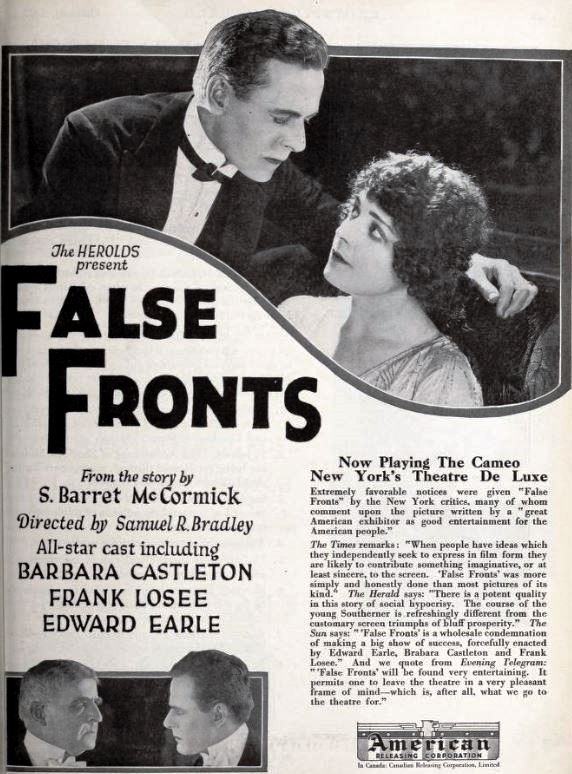
Director's Spotlight: United States
A Deep Dive into the 1922 Vision of Samuel R. Brodsky
The brilliance of False Fronts (1922) is inseparable from the visionary mind of its creator, Samuel R. Brodsky. Serving as a mirror to the anxieties of a changing world, it persists as a haunting reminder of our own cinematic history.
In False Fronts, Samuel R. Brodsky pushes the boundaries of conventional narrative. The film's unique approach to its subject matter has sparked endless debates and interpretations among cinephiles and critics alike.
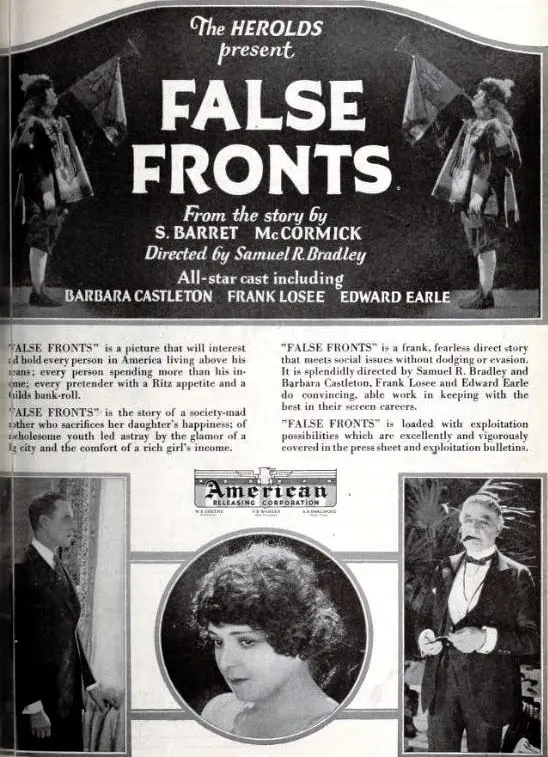
The visual language of False Fronts is defined by its use of shadows and framing, a hallmark of Samuel R. Brodsky's style. By utilizing a 1922-era palette, the film creates an immersive experience that perfectly complements its Drama themes.
| Cinematography | Handheld |
| Soundtrack | Diegetic |
| Editing | Rhythmic |
| Art Direction | Naturalist |
Visualizing the convergence of Samuel R. Brodsky's style and the core Drama narrative.
Keith Drummond, a penniless youth from a well-known family, is advised by John Lathrop to put on a wealthy front and work hard in order to be successful. With money borrowed from Lathrop, Keith takes only the first part of the advice and plunges into a social whirl. He marries nouveau riche Helen Baxter, but one day he denounces his whole way of life and leaves to work in the western oil fields. They are reunited when Keith establishes himself and Helen is reduced to poverty.
Decades after its release, False Fronts remains a vital piece of the cinematic puzzle. Its influence can be seen in countless modern works, solidifying Samuel R. Brodsky's status as a master of the craft in United States and beyond.