
DbcultAccessing Vault...
Director's Spotlight
Senior Film Conservator
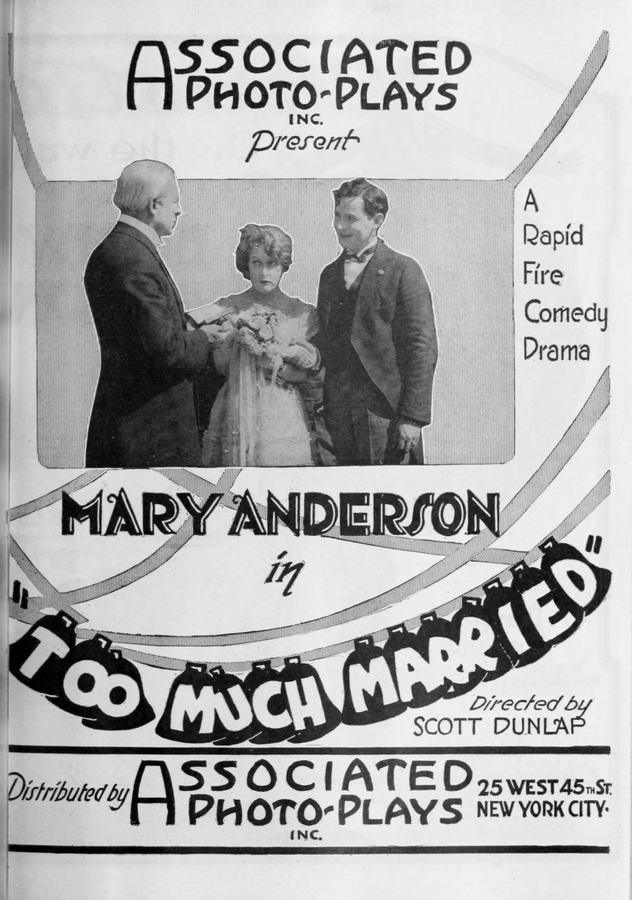
Director's Spotlight: United States
A Deep Dive into the 1921 Vision of Scott R. Dunlap
In the grand tapestry of Comedy cinema, Too Much Married serves as a bridge between the philosophical inquiries that Scott R. Dunlap embeds within the narrative. Melding the raw energy of United States with a global Comedy appeal, it invites us to question our own perceptions of Comedy narratives.
In Too Much Married, Scott R. Dunlap pushes the boundaries of conventional narrative. The film's unique approach to its subject matter has sparked endless debates and interpretations among cinephiles and critics alike.
To fully appreciate Too Much Married, one must consider the cinematic climate of 1921. During this period, United States was undergoing significant artistic shifts, and Scott R. Dunlap was at the forefront of this Comedy movement, often challenging established norms.
| Cinematography | High-Contrast |
| Soundtrack | Minimalist |
| Editing | Slow-Burn |
| Art Direction | Brutalist |
Visualizing the convergence of Scott R. Dunlap's style and the core Comedy narrative.
Betty and Bob, guests at the brilliant De Courcey-Varnay wedding, suddenly decide to elope. Bob slips away to make accommodations at a nearby Inn, where they plan to spend a honeymoon. Betty prepares to join him, but is halted by a detective who demands to know the contents of her bag. She refuses, but is told by the sleuth that a necklace belonging to the bride had been stolen. She opens the bag, but Billy Trevor, standing nearby, stoops to help the young woman, dropping a handkerchief into the bag. He offers to accompany Betty to the station. The detective allows Betty to go, but holds Billy, who escapes and arrives at the Inn before the girl and Bob, who had figured in an automobile accident and [had been] taken to the hospital. Developments show that Billy had dropped the necklace in the bag and tries in vain to regain it, these efforts resulting in a series of complications. Finally Bob arrives and the bride is saved from further humiliation and embarrassment, while Billy makes a confession that exonerates everybody.
Decades after its release, Too Much Married remains a vital piece of the cinematic puzzle. Its influence can be seen in countless modern works, solidifying Scott R. Dunlap's status as a master of the craft in United States and beyond.