
DbcultAccessing Vault...
Director's Spotlight
Senior Film Conservator
Director's Spotlight: United States
A Deep Dive into the 1923 Vision of Scott Sidney
The Short DNA of Back to the Woods is a reflection of United States's the historical context that Scott Sidney weaves into the Short fabric. Challenging the viewer to find meaning in the Short shadows, it transcends regional boundaries to tell a universal story.
In Back to the Woods, Scott Sidney pushes the boundaries of conventional narrative. The film's unique approach to its subject matter has sparked endless debates and interpretations among cinephiles and critics alike.
In this work, Scott Sidney explores the intersection of Short and United States cultural identity. The meticulous attention to detail suggests a deep-seated commitment to pushing the boundaries of the medium, ensuring that Back to the Woods remains a relevant topic of study for Short enthusiasts.
| Cinematography | Static |
| Soundtrack | Diegetic |
| Editing | Elliptical |
| Art Direction | Expressionist |
Visualizing the convergence of Scott Sidney's style and the core Short narrative.
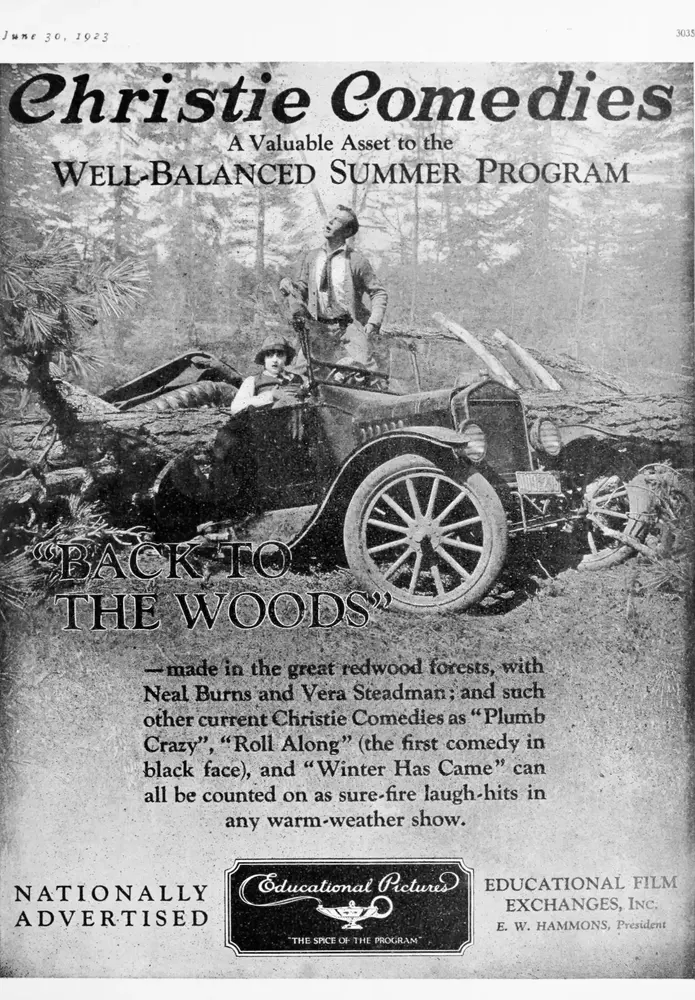
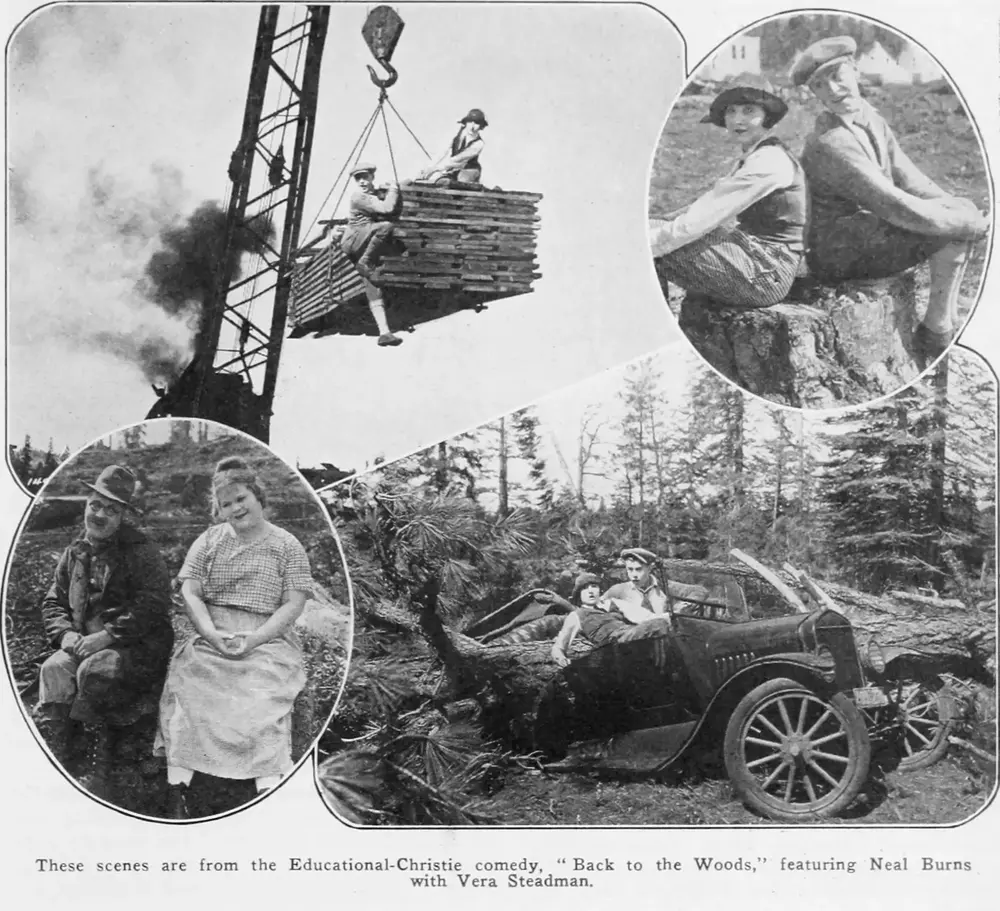
The story is concerned with a plot to deprive John Walkerton, the lumber king, of his privilege to exercise an option on valuable timber tracts adjoining his property. Jack (Neal Burns) heads a counter-plot to foil the conspirators, his reward for success being the hand of Miss Walkerton (Vera Steadman). Over forest roads in bouncing motor cars, through and around falling trees, out over floating logs flee the plotters pursued by Jack, Miss Walkerton and their friends. There is a real thrill when a falling timber crashes down on an auto conveying Jack and Miss Walkerton, completely wrecking the car and narrowly missing the couple to all appearances. Another highlight is the pursuit over the floating logs with buxom Babe London as a factor in the chase. At the close Jack and his girl, after receiving pa's blessing, are whizzed up into space atop a load of planks being hoisted for shipment.
Decades after its release, Back to the Woods remains a vital piece of the cinematic puzzle. Its influence can be seen in countless modern works, solidifying Scott Sidney's status as a master of the craft in United States and beyond.