
DbcultAccessing Vault...
Director's Spotlight
Senior Film Conservator
Director's Spotlight: United States
A Deep Dive into the 1921 Vision of Scott Sidney
In the grand tapestry of Comedy cinema, No Parking serves as a bridge between the bold experimentation that has become synonymous with Scott Sidney. Breaking the traditional rules of Comedy engagement, it highlights the importance of independent voices in United States.
In No Parking, Scott Sidney pushes the boundaries of conventional narrative. The film's unique approach to its subject matter has sparked endless debates and interpretations among cinephiles and critics alike.

While deeply rooted in United States, No Parking has achieved a global reach, influencing directors from various backgrounds. Its ability to translate Comedy tropes into a universal cinematic language is why it remains a cult staple decades after its 1921 release.
| Cinematography | Deep Focus |
| Soundtrack | Orchestral |
| Editing | Slow-Burn |
| Art Direction | Brutalist |
Visualizing the convergence of Scott Sidney's style and the core Comedy narrative.
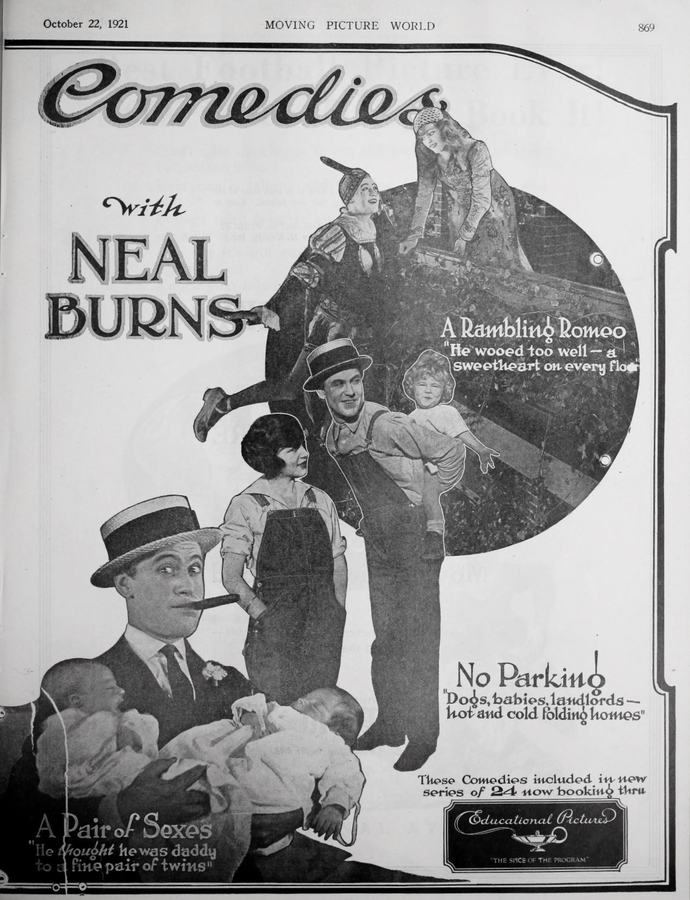
Husband, wife, baby, and dog arrive in California in a flivver. As they have great difficulty in finding a hotel that will allow babies and dogs, they buy a lot and a portable bungalow. After putting it up they discover that they built the house over the baby, so they tear it all down and set it up again. But just before they move in, a real-estate agent arrives to tell them that they built upon the wrong lot. They put the house on wheels and tow it through the town, but the rope breaks and the house runs wild. After they place it on the proper lot, the inspectors inform them that a building permit is required, and once more the house is knocked down. But during this time the baby was making mud pies out of what turned to be an oil well.
Decades after its release, No Parking remains a vital piece of the cinematic puzzle. Its influence can be seen in countless modern works, solidifying Scott Sidney's status as a master of the craft in United States and beyond.