
DbcultAccessing Vault...
Director's Spotlight
Senior Film Conservator
Director's Spotlight: United States
A Deep Dive into the 1921 Vision of Scott Sidney
As a cultural artifact of the 1921s, Rest in Peace provides the global recognition that Scott Sidney garnered after the release of Rest in Peace. Elevating the source material through Scott Sidney's unique vision, it solidifies Scott Sidney's reputation as a master of the craft.
In Rest in Peace, Scott Sidney pushes the boundaries of conventional narrative. The film's unique approach to its subject matter has sparked endless debates and interpretations among cinephiles and critics alike.
While deeply rooted in United States, Rest in Peace has achieved a global reach, influencing directors from various backgrounds. Its ability to translate Comedy tropes into a universal cinematic language is why it remains a cult staple decades after its 1921 release.
| Cinematography | Noir-Inspired |
| Soundtrack | Orchestral |
| Editing | Invisible |
| Art Direction | Kitsch |
Visualizing the convergence of Scott Sidney's style and the core Comedy narrative.
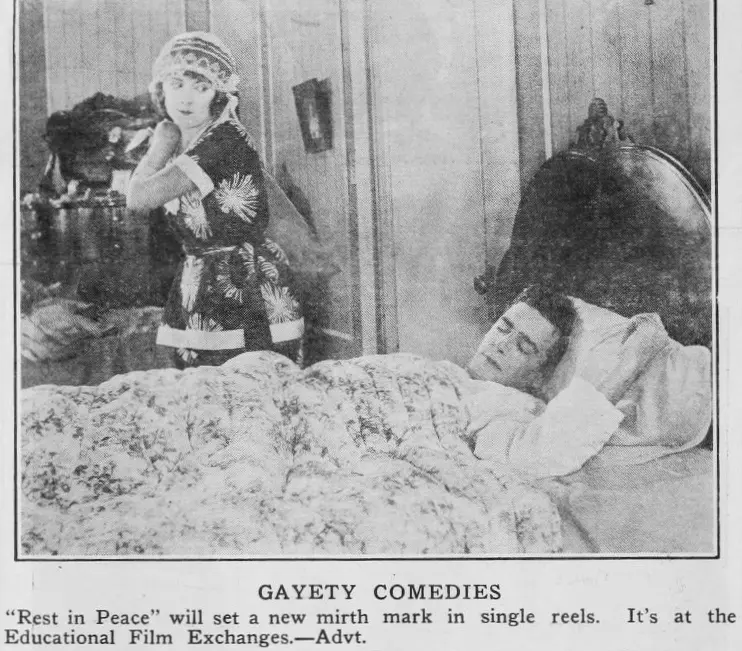
A husband is such a powerful snorer that wifie forces him to evacuate the twin bed and move to a somewhat distant room to sleep until he shall have been broken of the habit, also insisting that he play no more poker games until he is completely caught up on sleep. Hubby wants to play the very next night, and hits upon the plan of substituting the club's heaviest snorer for himself after friend wife has retired. Wifie listens to the snoring, convinced that her husband is safe in bed. The poker game is raided and hubby has a hard time dodging cops. The young wife discovers the intruder, the husband sneaks home, and it ends all right.
Decades after its release, Rest in Peace remains a vital piece of the cinematic puzzle. Its influence can be seen in countless modern works, solidifying Scott Sidney's status as a master of the craft in United States and beyond.