
DbcultAccessing Vault...
Director's Spotlight
Senior Film Conservator
Director's Spotlight: United States
A Deep Dive into the 1915 Vision of Scott Sidney
To understand the modern evolution of United States film, one must first look at The Painted Soul and the collaborative alchemy between Scott Sidney and the 1915 creative team. Subverting the expectations of the typical 1915 audience, it remains a vital reference point for anyone studying the evolution of Scott Sidney.
In The Painted Soul, Scott Sidney pushes the boundaries of conventional narrative. The film's unique approach to its subject matter has sparked endless debates and interpretations among cinephiles and critics alike.
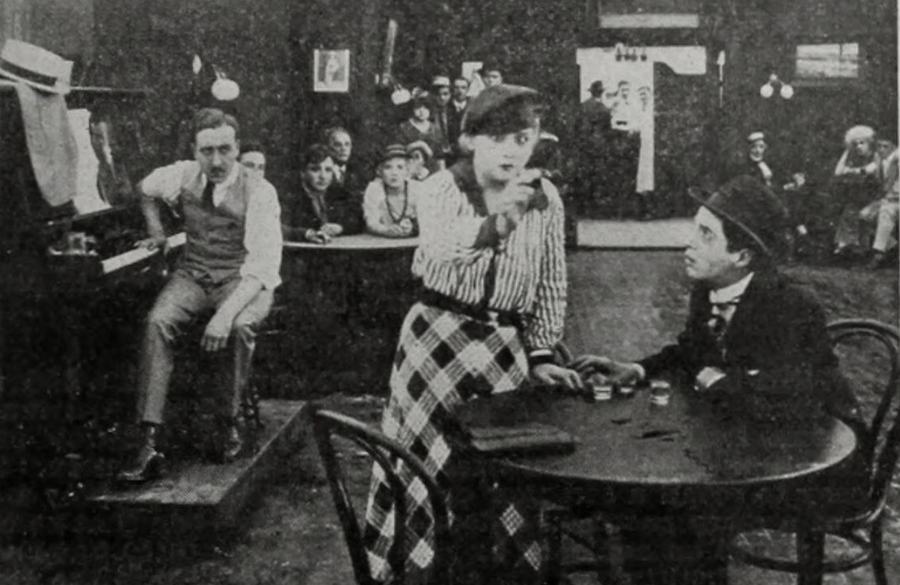
To fully appreciate The Painted Soul, one must consider the cinematic climate of 1915. During this period, United States was undergoing significant artistic shifts, and Scott Sidney was at the forefront of this cult movement, often challenging established norms.
| Cinematography | Deep Focus |
| Soundtrack | Orchestral |
| Editing | Invisible |
| Art Direction | Kitsch |
Visualizing the convergence of Scott Sidney's style and the core cult narrative.
Barnard completes a study in oils which he calls "The Resurrection." It represents a beautiful, dark woman, her awakened soul shining from her eyes. At a private exhibit in the studio the painting causes a great deal of admiring comment, and Barnard's mother, a society leader and an art connoisseur, admits to her son that he virtually "imprisoned a woman's soul" in the canvas. The soul of the picture, a few days later, stirs to the depths of her being a sordid girl of the underworld whom Barnard has found in the night courts and persuaded to become his model for "The Fallen Woman." Irene Brock, once she has met the rapt, spiritual gaze of Barnard's ideal, involuntarily revolts against the hideousness of her environment. The trade she has been accustomed to ply in saloon dance-halls and low resorts becomes a torture to her. Day by day Irene watches the new painting grow. But she is changing. Barnard, feeling that something is unsatisfactory, and that he will be unable to paint from his model "The Fallen Woman" of his imagination, reluctantly brings the sittings to a close. The moment of parting precipitates an emotional crisis. Love, for the first time, has dawned in the girl's soul, and Barnard, moved by a profound sympathy, takes her in his arms. The young artist's mother finds them in this position; she diplomatically conceals her horror while smilingly asserting that "that could never be." Irene goes away, struggling to be resigned. But the young artist, fired by a self-sacrificing love, refuses to let this end the episode. At last, the mother seeks Irene in her squalid lodging. "Such a marriage," she pleads with the girl, "would make my son a social outcast. Even your love could not always make him forget." The soul of "The Resurrection" working upon her heart, and controlled also by her deep love for Barnard, Irene promises to cure him of his passion. That same night she deliberately gives herself up to a detective an old enemy of hers. The following morning she sends for Barnard to come to the night court and pay her fine. He goes. She is brought before the judge. To the charge, she replies, "I am guilty." Silently, Barnard puts the money on the desk. Outside, in the corridor, they meet. By sheer force of will, she resists the almost overwhelming impulse to fling herself in his arms and tell him the entire story of her deception. The next instant, with a murmured good-bye, he turns and rushes out of doors. That evening Irene slips into the deserted studio, and stands long before the painting of "The Resurrection." From these wonderful eyes she imbibes strength for her lonely struggle with the world.
Decades after its release, The Painted Soul remains a vital piece of the cinematic puzzle. Its influence can be seen in countless modern works, solidifying Scott Sidney's status as a master of the craft in United States and beyond.