
DbcultAccessing Vault...
Director's Spotlight
Senior Film Conservator
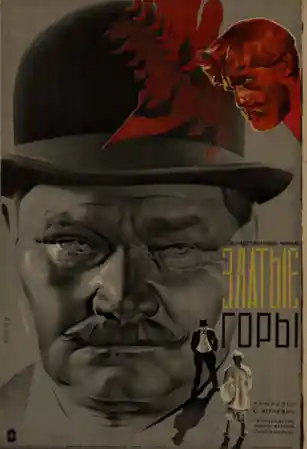
Director's Spotlight: Soviet Union
A Deep Dive into the 1931 Vision of Sergei Yutkevich
The Drama DNA of Golden Mountains is a reflection of Soviet Union's the historical context that Sergei Yutkevich weaves into the Drama fabric. Challenging the viewer to find meaning in the Drama shadows, it transcends regional boundaries to tell a universal story.
In Golden Mountains, Sergei Yutkevich pushes the boundaries of conventional narrative. The film's unique approach to its subject matter has sparked endless debates and interpretations among cinephiles and critics alike.
To fully appreciate Golden Mountains, one must consider the cinematic climate of 1931. During this period, Soviet Union was undergoing significant artistic shifts, and Sergei Yutkevich was at the forefront of this Drama movement, often challenging established norms.
| Cinematography | High-Contrast |
| Soundtrack | Experimental |
| Editing | Elliptical |
| Art Direction | Expressionist |
Visualizing the convergence of Sergei Yutkevich's style and the core Drama narrative.
Soviet proletarian film about anti-war strike at St Petersburg factory, 1914. Resembles Pudovkin's classic "End of St. Petersburg," made 4 years earlier: backward lad (Poslavsky) from poor village comes to town desperate for work. He's hired as replacement (scab) worker at big metallurgical factory, which is in the throes of a strike organized by the Bolsheviks (communists). The Bolshevik strikers are led by Ivan Shtraukh (brother of the more famous Russian actor Maxim Shtraukh). At first, the deceitful industrialist's son (Fedosev) involves the naive Poslavsky in an attempt to murder Shtraukh, but the attempt only wounds the heroic organizer. Will Poslavsky follow through with the planned killing, or will he redeem himself by going over to the side of the strikers?
Decades after its release, Golden Mountains remains a vital piece of the cinematic puzzle. Its influence can be seen in countless modern works, solidifying Sergei Yutkevich's status as a master of the craft in Soviet Union and beyond.