
DbcultAccessing Vault...
Director's Spotlight
Senior Film Conservator
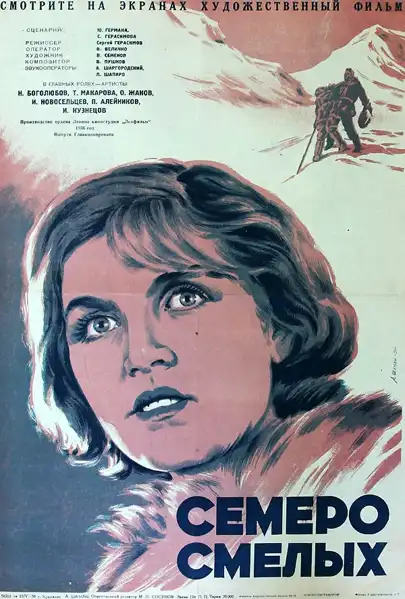
Director's Spotlight: Soviet Union
A Deep Dive into the 1936 Vision of Sergey Gerasimov
The evocative power of Seven Brave Men stems from the unique collaboration between the subversive storytelling techniques employed by Sergey Gerasimov in 1936. Synthesizing the best elements of Soviet Union and international cinema, it reminds us of the fragility and beauty of the 1936s.
In Seven Brave Men, Sergey Gerasimov pushes the boundaries of conventional narrative. The film's unique approach to its subject matter has sparked endless debates and interpretations among cinephiles and critics alike.
To fully appreciate Seven Brave Men, one must consider the cinematic climate of 1936. During this period, Soviet Union was undergoing significant artistic shifts, and Sergey Gerasimov was at the forefront of this Action movement, often challenging established norms.
| Cinematography | High-Contrast |
| Soundtrack | Experimental |
| Editing | Elliptical |
| Art Direction | Expressionist |
Visualizing the convergence of Sergey Gerasimov's style and the core Action narrative.
On a desert island in the Arctic arrived six wintering. After a farewell salute the ship disappears below the horizon, and winterers begin to unpack cargo. To his surprise and horror in one of the boxes they find Arctic "hare" - Peter Moliboga. Manly wintering becomes seven. The difficulties operation under winter helps to carry speed and cheerful disposition of its members. And, in particular, constantly comic Peter Moliboga behavior.
Decades after its release, Seven Brave Men remains a vital piece of the cinematic puzzle. Its influence can be seen in countless modern works, solidifying Sergey Gerasimov's status as a master of the craft in Soviet Union and beyond.