
DbcultAccessing Vault...
Director's Spotlight
Senior Film Conservator
Director's Spotlight: India
A Deep Dive into the 1936 Vision of Shantaram Rajaram Vankudre
The artistic breakthrough represented by Amar Jyoti in 1936 highlights the uncompromising vision of Shantaram Rajaram Vankudre that defines this Drama masterpiece. In the context of India's rich cinematic history, it captures a specific kind of cinematic magic that is rarely replicated.
In Amar Jyoti, Shantaram Rajaram Vankudre pushes the boundaries of conventional narrative. The film's unique approach to its subject matter has sparked endless debates and interpretations among cinephiles and critics alike.
In this work, Shantaram Rajaram Vankudre explores the intersection of Drama and India cultural identity. The meticulous attention to detail suggests a deep-seated commitment to pushing the boundaries of the medium, ensuring that Amar Jyoti remains a relevant topic of study for Drama enthusiasts.
| Cinematography | Deep Focus |
| Soundtrack | Experimental |
| Editing | Elliptical |
| Art Direction | Expressionist |
Visualizing the convergence of Shantaram Rajaram Vankudre's style and the core Drama narrative.
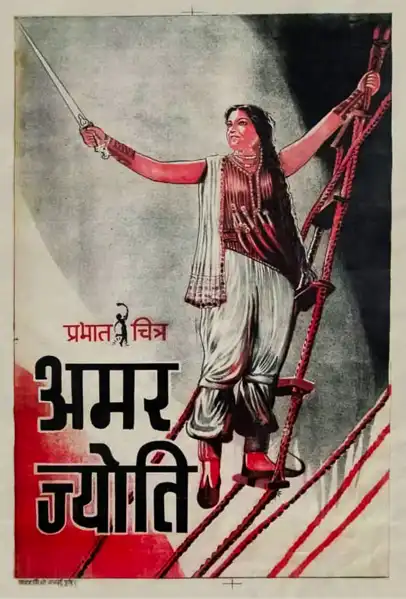
Adventure classic featuring Durga Khote's most memorable role as the pirate Queen Saudamini. Faced with extreme patriarchal laws in an ancient seaport kingdom and denied the legal custody of her infant son Sudhir, Saudamini becomes a pirate declaring war on the state, and especially on its tyrannical minister of justice, Durjaya (Chandramohan). She attacks a royal ship and captures Durjaya, inadvertently also taking Princess Nandini (Apte). In captivity, Durjaya declares his love for Nandini but she falls fir a shepherd boy (Nandrekar) who turns out to be Saudamini's long-lost son Sudhir. Durjaya's men then capture Saudamini and a palace intrigue ensues marked by her emancipatory rhetoric and the universal humanist arguments of her adviser Shekhar (Kale).
Decades after its release, Amar Jyoti remains a vital piece of the cinematic puzzle. Its influence can be seen in countless modern works, solidifying Shantaram Rajaram Vankudre's status as a master of the craft in India and beyond.